Watch_Dogs 2 Wants to Be Liked — and It Works
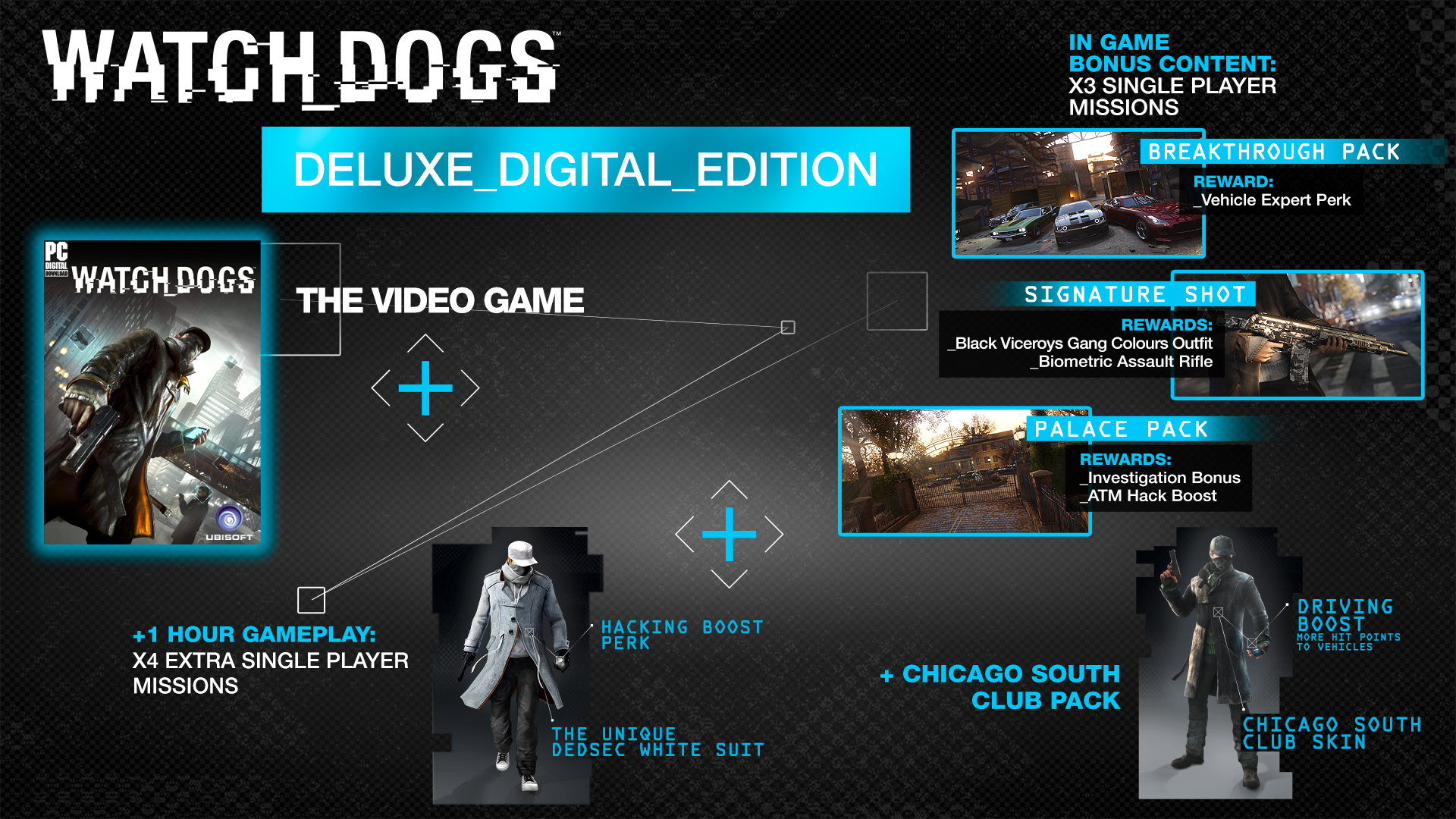
The original Watch_Dogs had a personality problem. It wanted to be a gritty techno-thriller about surveillance capitalism, and it mostly succeeded at the gritty part — a grey, rain-soaked Chicago, a protagonist with the warmth of a damp flannel. Ubisoft Montreal knew this. Watch_Dogs 2 is their correction: a game so determined to be fun, so consciously designed around likability, that it occasionally feels like the studio is leaning across the table asking if you're having a good time yet. The strange thing is, more often than not, you are.
Set in a sun-drenched version of the San Francisco Bay Area — Oakland, Silicon Valley, Marin County all stitched together — the game follows Marcus Holloway and a hacker collective called DedSec. The target is a fictional tech company called Blume and its ctOS surveillance platform, which framed Marcus for crimes he didn't commit. It's a setup that could easily tip into po-faced messaging, but the writing largely keeps its sense of humor intact. The tone is closer to Mr. Robot's lighter moments than to its heavier ones, and that calibration mostly holds.
A World Built for Wandering
The Bay Area recreation is genuinely impressive as open-world design — not just as a postcard recreation, but as a functional environment. The geography has texture. Oakland's industrial waterfront feels distinct from the manicured campuses of a thinly veiled Google or the tourist-trap density of Fisherman's Wharf. Ubisoft Montreal clearly spent time on sightlines and traversal, ensuring that the elevated highways and rooftops Marcus can scramble across actually connect to something interesting. You never feel far from a reason to go somewhere.
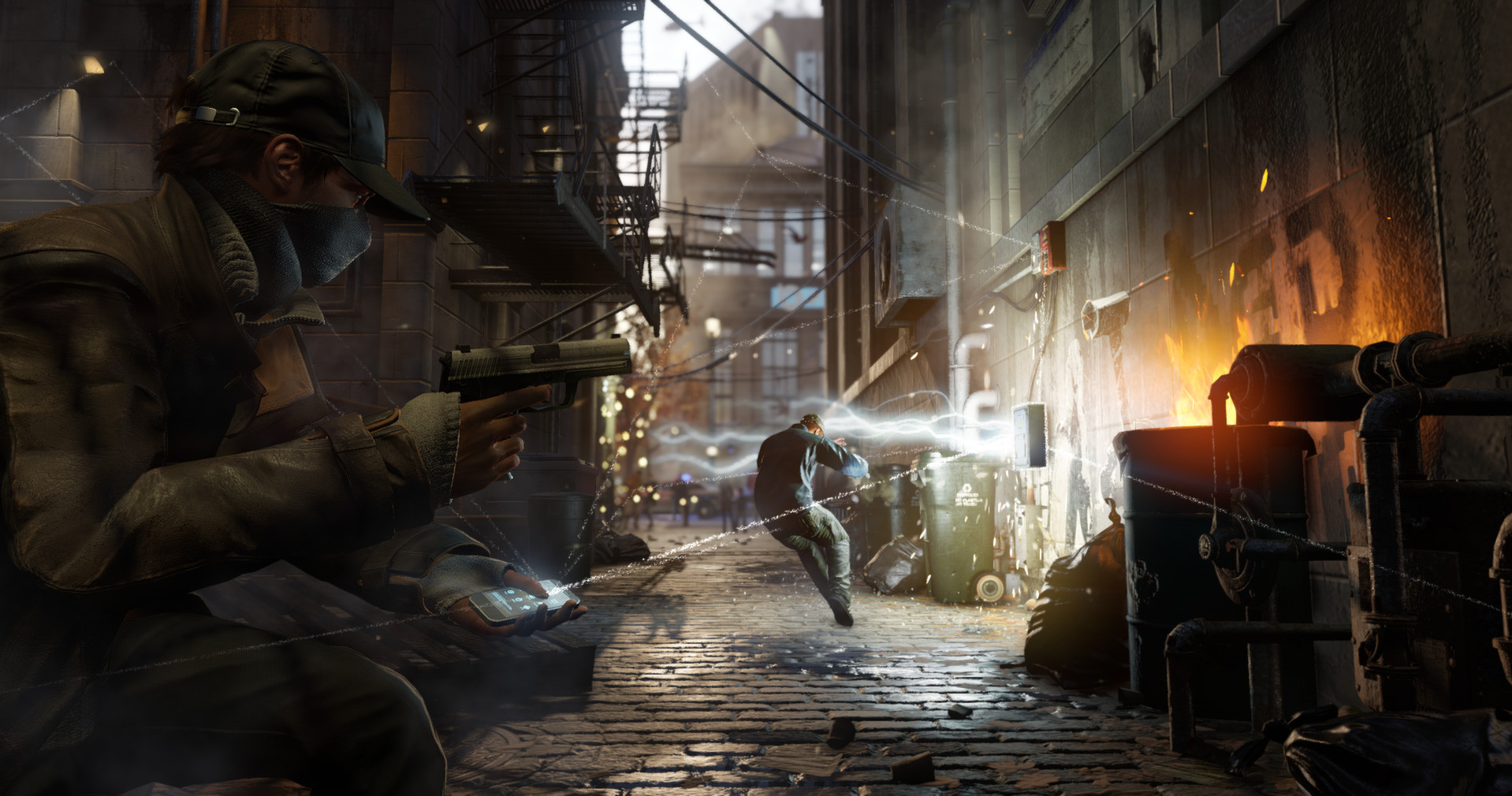 Scene from Watch_Dogs 2.
That said, the open world does suffer from the familiar Ubisoft density problem — activities and icons piling up faster than any reasonable player processes them. The map can look like a pin board hit by a mild earthquake. The game is smart enough to front-load the most interesting missions and let the side content breathe a little, but midway through the map becomes a negotiation with your own attention span. Some players will find this abundance comfortable. Others will feel the mild exhaustion of a checklist that never quite clears.
Hacking as a Design Language
Where Watch_Dogs 2 most clearly separates itself from its predecessor is in how hacking functions as a moment-to-moment verb rather than a cinematic flourish. Marcus can take control of cameras, vehicles, forklifts, construction cranes, and other networked machinery — not through a cut-scene, but in real time, with spatial logic that actually holds up. Staging a heist by chaining camera jumps until you locate a security terminal, then sending a remote-controlled quadcopter through an air vent to steal data, has a satisfying internal consistency. The system rewards patient attention more than combat reflexes.
The RC Jumper — a small wheeled robot Marcus can deploy — is the most underrated tool in the game. It can slip under doors, distract guards, and access terminals that Marcus himself can't reach without triggering alerts. In a game full of flashy abilities, it's the quiet, practical ones that tend to produce the most memorable problem-solving. The skill tree supports this: investing in hacking-focused upgrades opens entirely different approaches to mission areas, and it's possible to complete a significant stretch of the game's content without firing a weapon once. That's worth noting because it's not common.
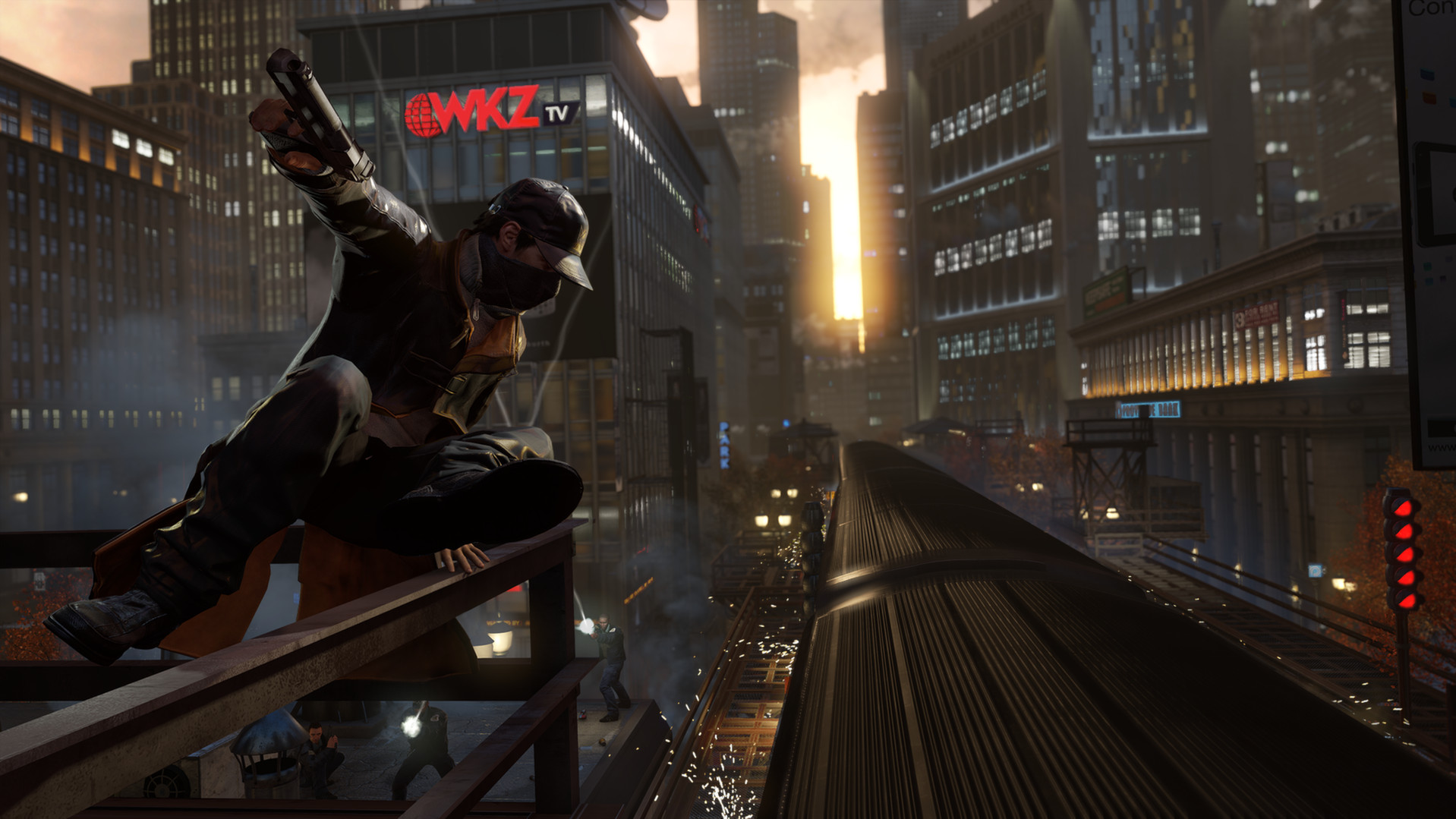 Scene from Watch_Dogs 2.
Combat That Gets the Job Done, Mostly
The shooting, to be direct about it, is serviceable. Marcus isn't a trained soldier, and the game doesn't pretend he is — his mobility, the chaos triggered by hacking, and the general messiness of a firefight when half the vehicles on the street are accelerating toward someone all contribute to a combat feel that works on its own terms. The 3D-printed weapons Marcus crafts feel appropriately rough — they look homemade, they sound homemade, and they handle with a slight looseness that's probably intentional. The stun gun in particular is satisfying to build an entire aggressive playstyle around.
Where it struggles is in extended, open-field confrontations against large groups of enemies. The cover system is functional but not precise — ducking behind a car in tight spaces can feel like a negotiation with the geometry. And enemy AI has a tendency to swarm in ways that punish non-lethal builds more harshly than they probably should. These aren't fatal flaws, but they mean the game works best when you're designing encounters rather than reacting to them. It's a stealth-adjacent system that doesn't fully commit to stealth mechanics, and that tension shows.
The DedSec Crew and Why They Matter
Marcus's crew — Wrench, Sitara, Josh, Horatio — are written with enough specificity that they accumulate into something. Wrench in particular, the mask-wearing, motor-mouthed hardware guy, has become something of an emblematic character for the series: loud, earnest beneath the bravado, and given just enough backstory to feel like a person rather than a function. The writing isn't always sharp — there are scenes that telegraph their emotional beats about three seconds before landing them — but the voice performances carry considerable weight. It helps that the cast sounds like they're actually in the same room with each other.
The game's best missions lean into this group dynamic. A sequence involving a ridesharing company — skewering the gig economy with a specificity that still reads clearly — works partly because the crew's banter during the mission planning feels like genuine collaboration. There are also some late-game missions that shift tone hard enough to feel like a different game for twenty minutes, and whether that tonal whiplash is a flaw or an ambition is genuinely hard to call. I found myself thinking about them after the credits. That's not nothing.
Structure, Pacing, and the Long Middle
Watch_Dogs 2 uses a follower-count system to gate story progression — completing missions earns DedSec followers, and hitting certain thresholds unlocks the next chapter of the main story. It's a transparent conceit, justified in-fiction by the idea that DedSec is running a public influence campaign. In practice, it gives the game a rhythm that acknowledges open-world pacing problems without fully solving them. If you want to push the main story, you can. If you want to wander and grind side missions, the game accommodates that too. The mechanic functions as a kind of permission structure.
The middle section — roughly the second and third acts — is where momentum dips most noticeably. The antagonist structure is diffuse, spread across multiple corporate targets rather than building toward a single confrontation, and some of the mission variety that distinguishes the opening hours gives way to repetition. Infiltrating a server room or a guarded compound for the seventh time requires the hacking toolkit to carry more creative weight than it sometimes can. The final chapters recover some of this energy, but the sag is real.
What It Gets Right That Its Peers Don't
In the crowded space of open-world action games — a genre that includes the relentless ambition of titles like Red Dead Redemption 2 and the more focused sandboxes of games like inFamous Second Son — Watch_Dogs 2 occupies a specific, underappreciated niche. It's a game about systems thinking: about reading an environment, identifying leverage points, and constructing a chain of cause-and-effect that results in something like elegance. Not every mission achieves this. But when it does — when the quadcopter, the RC Jumper, a commandeered delivery truck, and a well-timed traffic manipulation converge on a clean exfiltration — the game feels like nothing else from its era.
Its politics are also more pointed than most games in this space are willing to be. The targets — ride-sharing exploitation, algorithmic discrimination, corporate surveillance, social media manipulation — are rendered with enough specificity that the satire has edges. It doesn't always push hard enough to be uncomfortable, and there are moments where the messaging retreats into broad gesture, but the instinct to engage with real structures rather than invented ones gives the game a grounding that most open-world action fare avoids entirely.
Watch_Dogs 2 is a game that wants your affection and earns a reasonable portion of it — not through bombast or scale, but through craft in the places where craft shows: a toolkit that actually rewards creativity, a city that rewards exploration, and a group of characters specific enough to carry the story's wobblier moments. Its flaws are real and its middle section tests patience. But the moments where its systems click into place — quiet, clever, entirely self-directed — are the kind of thing you keep turning over afterward. That counts for more than a polished surface.
Editorial scoring
Reader Q&A
How long does it take to finish Watch_Dogs 2 Wants to Be Liked — and It Works?
Main story runs around 24 hours depending on how thoroughly you explore. Completionists can spend 2-3× that.
Is Watch_Dogs 2 Wants to Be Liked — and It Works good for newcomers to Open-World Hacking?
It depends. The systems are deep but the tutorial does a fair job. Veterans of Open-World Hacking will feel at home faster.
Which platform should I play Watch_Dogs 2 Wants to Be Liked — and It Works on?
Steam Deck handles this title well — verified compatibility on most recent patches.
Was Watch_Dogs 2 Wants to Be Liked — and It Works worth the launch-day price?
If you're a fan of Ubisoft Montreal, yes. If you're new to the studio, a sale price is more comfortable.
Are there DLCs or expansions worth picking up?
Skip the cosmetic DLC. The story expansion is the only one we'd recommend at full price.
What did Ubisoft Montreal get right (and what could be better)?
Ubisoft Montreal nailed the moment-to-moment loop and the world-building. Pacing in the mid-game and inventory UX have room for improvement.
Reader comments