Tunic Made Me Feel Like I'd Forgotten How to Read
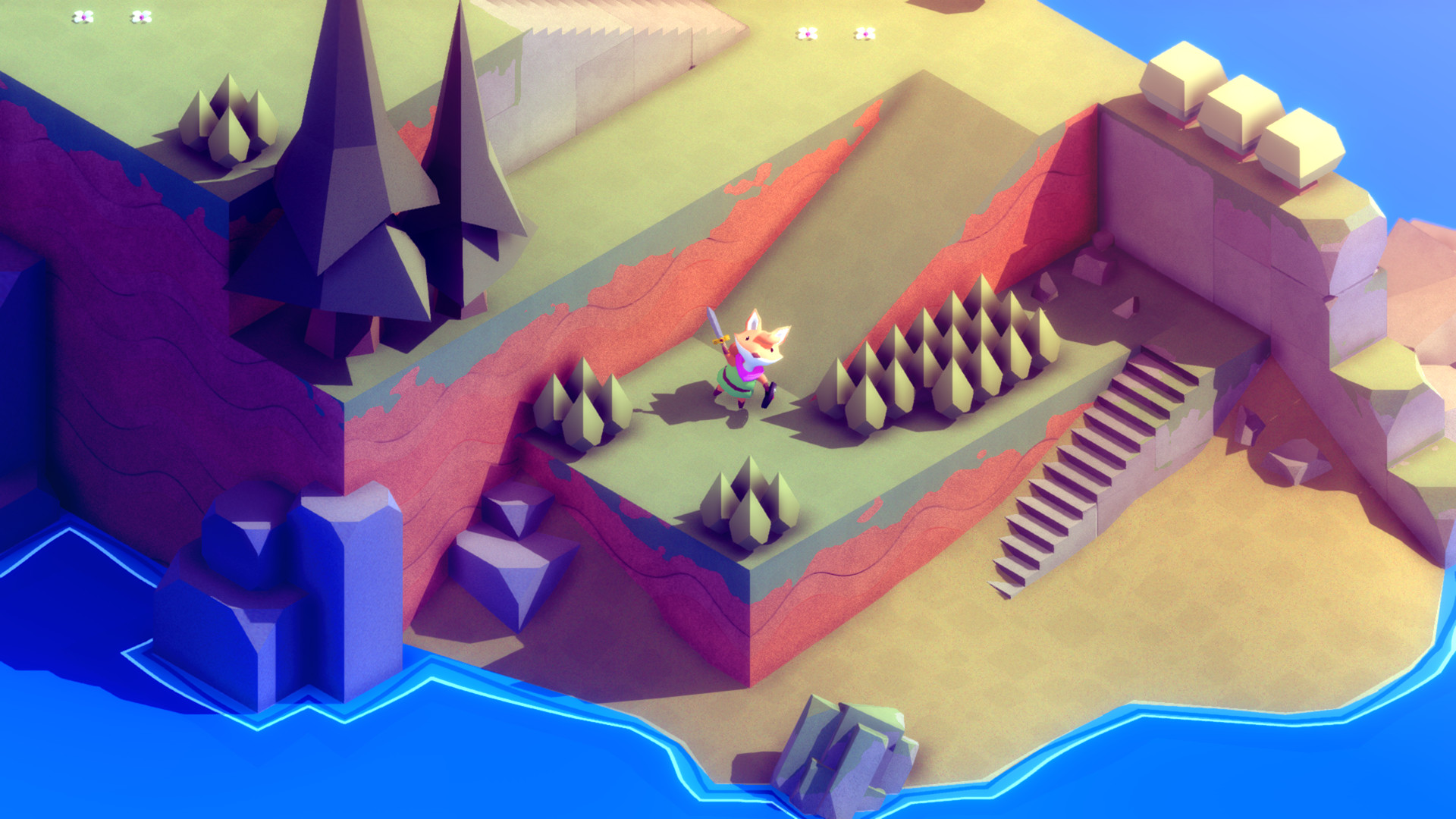
There is a moment early in Tunic where you pick up a page from what appears to be the game's instruction manual. It shows diagrams, icons, dotted lines pointing at things. It is written in a completely fictional language. You cannot read a word of it. And yet you still learn something from it, because Andrew Shouldice designed the page well enough that the pictures do real work. You find yourself staring at a controller diagram trying to reverse-engineer meaning from arrow placement like you're reading ancient cartography. It's a strange feeling — not quite confusion, not quite wonder. Somewhere in between.
Tunic released in 2022, developed solo by Shouldice over roughly six years. It looks, on a surface pass, like a small affectionate Zelda tribute: a fox in a green tunic, an overworld with secrets, dungeons with keys and bosses. That description is not wrong, exactly, but it's like describing Outer Wilds as a space exploration game. Technically accurate, completely inadequate.
The Manual Is the Game
The manual pages scattered across the world are the game's central structural conceit, and they are doing heavier lifting than they might appear to. Each page is a fragment of a physical instruction booklet — the kind of thing that used to come in the box with an NES cartridge. The difference here is that the text is fictional, the diagrams are incomplete, and you will accumulate pages in an order determined by where you wander rather than any logical sequence. You might learn about a mechanic on page 14 before you find page 3.
 Scene from Tunic.
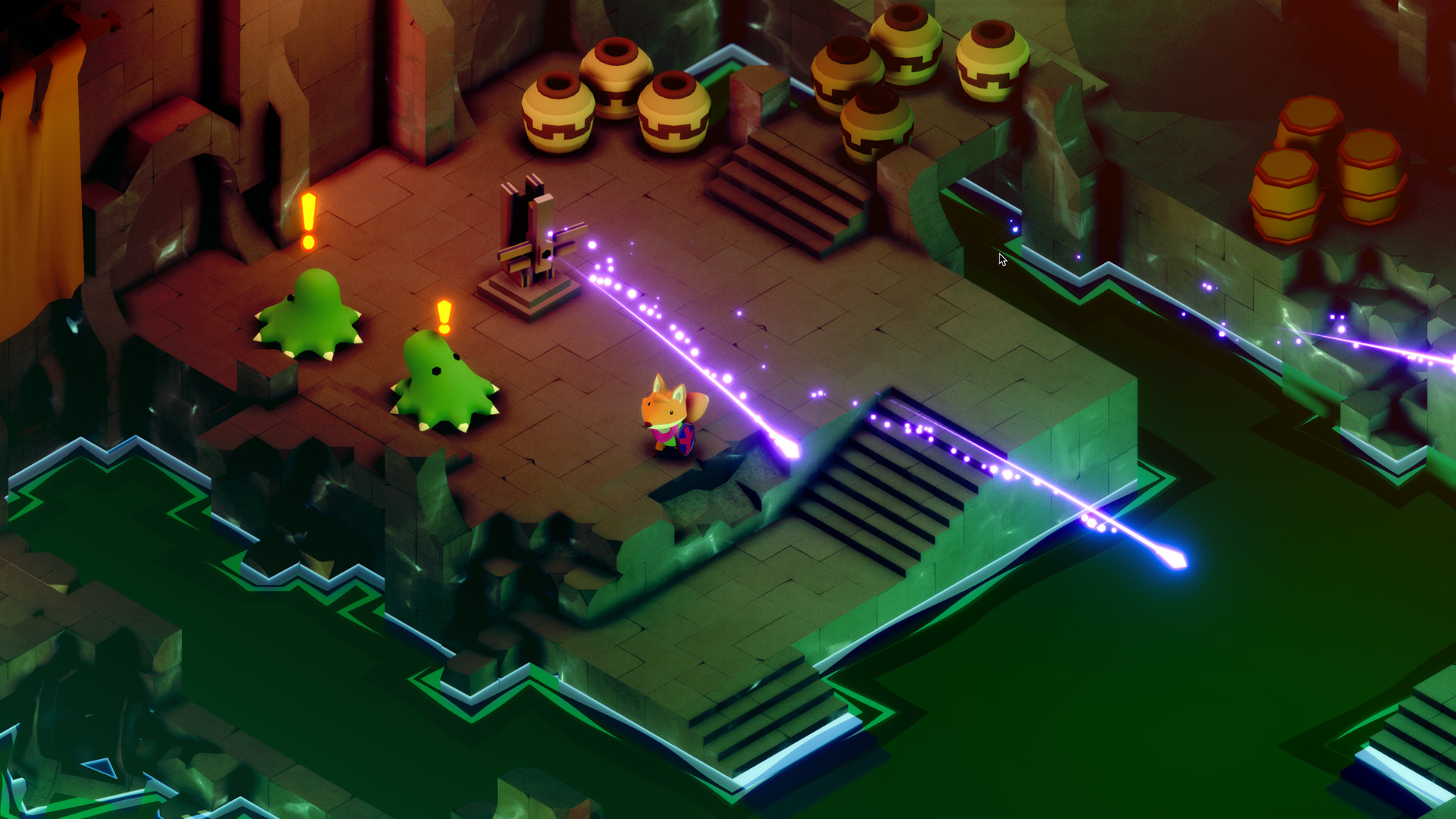
What this produces is a specific kind of productive disorientation. You are always slightly behind the game's logic, inferring rules from partial evidence. Combat has a stamina system; you figure that out not from a tooltip but from dying repeatedly and eventually noticing the bar. The shield works in ways the game gestures at without fully explaining. There is a sword charge attack that I did not fully understand until I had cleared two full dungeon areas. This is either brilliant design philosophy or deeply annoying, and for a lot of players it will be both, sometimes within the same hour.
Combat That Punishes Inattention
Shouldice was clearly paying attention to FromSoftware's work. Tunic's combat is not as precise or deep as Dark Souls, but it borrows the same basic proposition: encounters are not balanced for comfort. Enemies deal serious damage. You have limited healing. Dying sends you back to the last shrine with a portion of your collected currency gone — you can recover it from the death point, which creates a familiar push-your-luck dynamic without Tunic having to explicitly borrow that language.
The dodge and block mechanics feel genuinely considered rather than tacked on. Blocking at the right moment deflects an attack cleanly; getting it wrong and you eat the hit through the shield. Certain enemy types cannot be staggered and have to be approached with patience rather than aggression, which forces you to actually observe attack patterns rather than just hammering in. Whether this combat rises to the level of its inspirations is debatable. I found some of the boss encounters satisfying and others a bit flat — the game's early boss is memorable, but the mid-game stumbles into a couple of fights that feel more about attrition than pattern recognition.
 Scene from Tunic.
The World Design Is Doing a Lot of Quiet Work
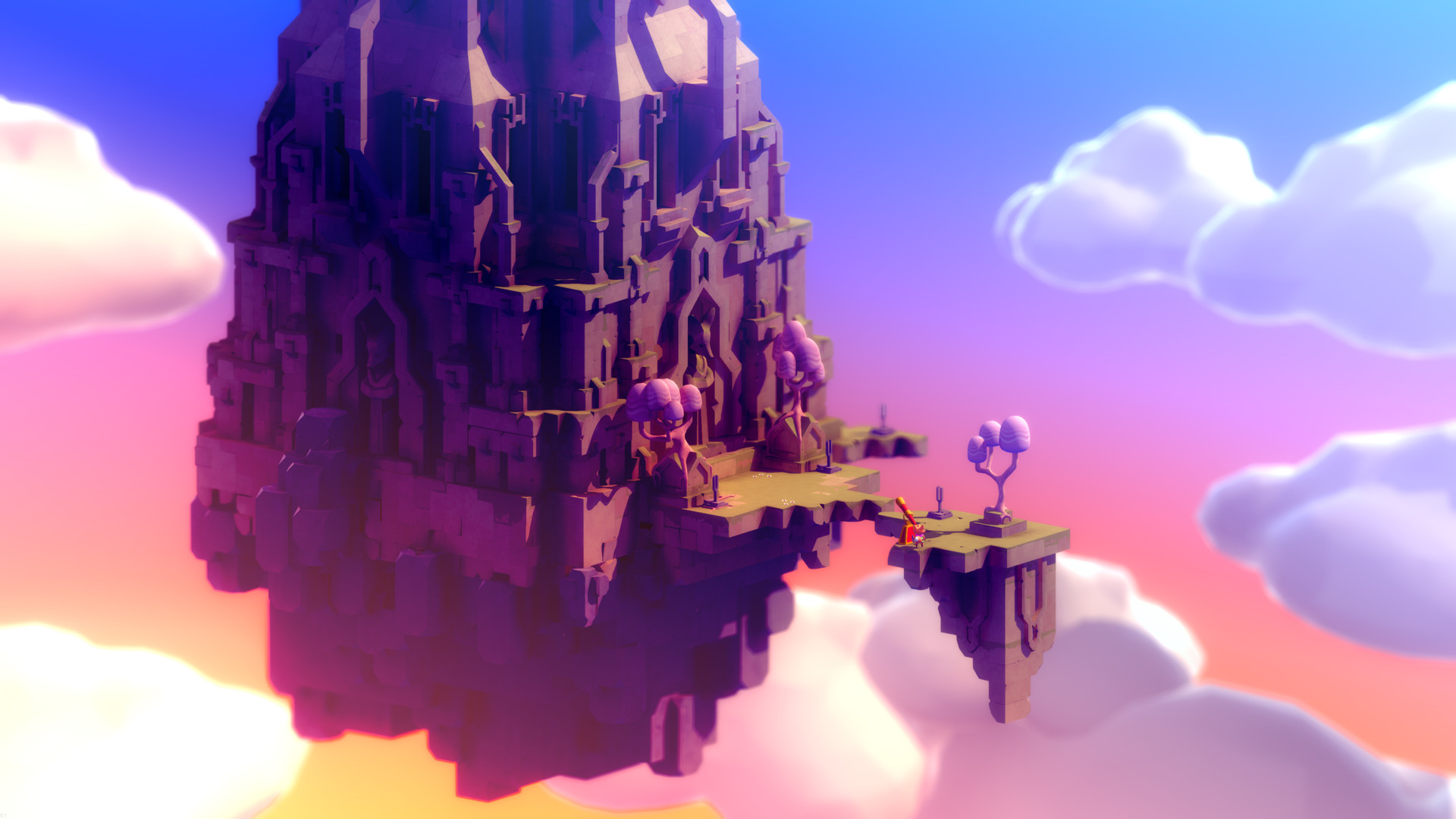
The overworld is small by most genre standards but exceptionally dense with interconnection. Shortcuts open in ways that retroactively reframe the map you thought you understood. A path you dismissed as decorative turns out to loop back to the starting area and shave four minutes off a route you'd been taking the long way around. This is structurally similar to how Supergiant uses space in Hades — every room is doing double duty — but Tunic achieves it in a more open context, which makes the moments of realization feel earned in a different way.
The environment itself cycles between a ruined garden area, the interior of crumbling structures, and a handful of other distinct zones without ever feeling like it's padding for variety. What strikes you after a while is how legible the geography becomes once you stop waiting for the game to explain it to you. The map — which you can fill in by finding map pages — is itself incomplete in the early hours, and navigating by landmark rather than minimap becomes natural faster than you'd expect.
The Puzzle Layer Underneath
Here is where Tunic becomes genuinely hard to categorize. Underneath the Zelda-adjacent action-adventure there is a puzzle game — a real one, not the kind where 'puzzle' means 'press these blocks.' The fictional language in the manual is internally consistent and can be decoded. There are secrets in the game that cannot be found through exploration alone; they require reading symbols, cross-referencing manual pages, and arriving at conclusions through lateral thinking rather than spatial navigation. This layer is almost completely invisible until you start noticing that certain things are not explained by anything you've found.
I'll be honest: I didn't solve most of this myself. Tunic is a game where, depending on your tolerance for sitting with unresolved mysteries, you may find yourself consulting the community after a point. There's no shame in it — the puzzle design is calibrated for the kind of person who spent teenage years on ARG forums, not casual players who finished Breath of the Wild. Whether that's a feature or a flaw probably says more about you than it does about Shouldice's decisions.
Accessibility as a Design Acknowledgment
Tunic has an accessibility menu with toggleable options including invincibility and a no-fail mode. It also has a single toggle that reduces enemy aggression significantly. These are listed without judgment in the options, which is the right approach. What's worth noting is that Shouldice made this choice explicitly aware that the game's difficulty is a component of its design, not an afterthought. The result is that the options feel like an acknowledgment rather than a contradiction — you can engage with the puzzle layer and the world design even if the combat difficulty is not for you.
This matters because the things that make Tunic genuinely interesting are not the difficulty. They're the manual, the environmental storytelling, the slow decoding of a system that refuses to explain itself on demand. The difficulty is one delivery mechanism for those things, not the substance itself. Separating them is a reasonable design choice, and it probably expanded the game's audience without meaningfully diluting the experience for players who want the unmodified version.
What the Buy Verdict Actually Looks Like
Tunic is not a smooth experience. Some of the mid-game pacing drags. The combat, while competent, doesn't hit the tactile highs of the games it's drawing from. If you come in expecting a tight Zelda homage with mechanically interesting dungeons, you may find the game's actual preoccupations — language, decoding, the texture of not-knowing — more eccentric than you signed up for.
But there are very few games that produce the specific sensation of holding an artifact you don't fully understand and working toward understanding it through patient attention. Outer Wilds does it. Return of the Obra Dinn does it in a different register. Tunic earns a place in that small category. The manual page you can't read is still, somehow, telling you something. That's not a small design achievement.
Editorial scoring
Reader Q&A
How long does it take to finish Tunic Made Me Feel Like I'd Forgotten How to Read?
Main story runs around 120 hours depending on how thoroughly you explore. Completionists can spend 2-3× that.
Is Tunic Made Me Feel Like I'd Forgotten How to Read good for newcomers to Isometric Puzzle?
It depends. The systems are deep but the tutorial does a fair job. Veterans of Isometric Puzzle will feel at home faster.
Which platform should I play Tunic Made Me Feel Like I'd Forgotten How to Read on?
Console version is the most stable on launch. PC version benefits from the modding scene long-term.
Was Tunic Made Me Feel Like I'd Forgotten How to Read worth the launch-day price?
If you're a fan of Andrew Shouldice, yes. If you're new to the studio, a sale price is more comfortable.
Are there DLCs or expansions worth picking up?
Wait for the Game of the Year edition — it bundles everything at a fair discount.
What did Andrew Shouldice get right (and what could be better)?
Andrew Shouldice nailed the moment-to-moment loop and the world-building. Pacing in the mid-game and inventory UX have room for improvement.
Reader comments