Tales of Arise Looks Like the Future and Plays Like the Past
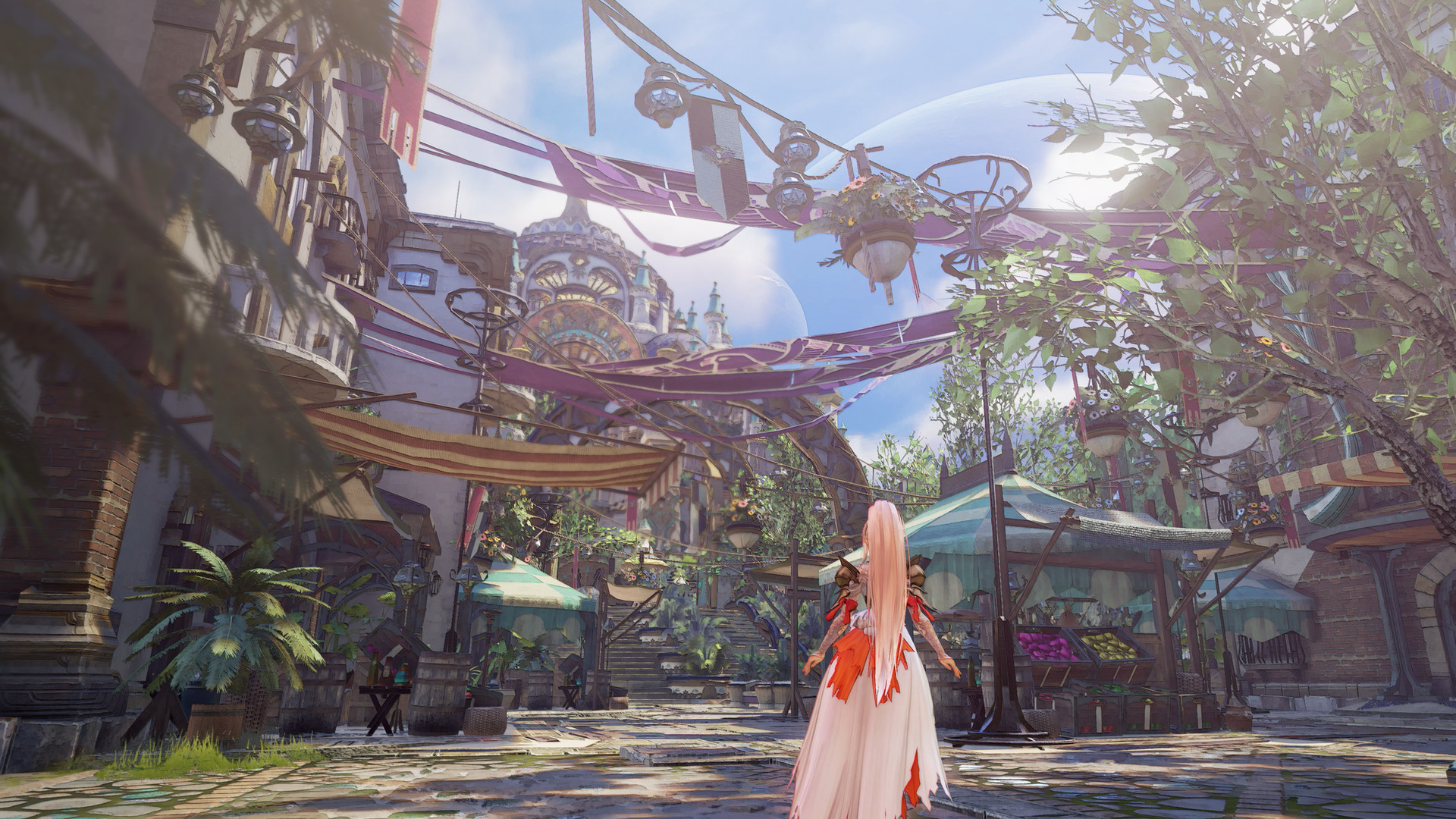
Tales of Arise arrives with the kind of visual upgrade that makes you forget, briefly, that the Tales series has been running the same basic playbook since the mid-nineties. The art direction is genuinely striking — watercolor backgrounds, volumetric lighting that catches dust motes in abandoned temples, character designs that look ripped from a high-budget Ufotable production rather than the series' historically rougher anime aesthetic. Bandai Namco clearly spent in-game-currency making this thing look the part.
The question worth sitting with isn't whether it's pretty. It is. The question is whether the systems underneath the coat of paint have grown to match. The answer is: partly. Tales of Arise is the most confident the series has looked in years, and the most comfortable it's been with its own limitations. Whether those limitations bother you depends entirely on what you want from a forty-hour action-JRPG.
Combat That Earns Its Complexity
The real-time combat system — built around a cast of six characters you swap between on the fly — is the strongest it's been in recent series memory. Alphen's Flaming Edge strikes, where he deliberately injures himself to deal fire-enhanced damage, create a genuine resource tension that most action-JRPGs hand-wave away. It's not just a flashy visual; every use is a small decision about how much health buffer you can afford to trade. Shionne's kit counters this directly, her artes functioning as both long-range attacks and party heals, so keeping her active is a tactical call rather than a passive background chore.
 Scene from Tales of Arise.
Boost Strikes — the flashy co-op finishers that chain between party members — could have been pure spectacle. They're more useful than that. Triggering one on a staggered enemy extends the juggle window long enough to burn down a third of a boss's health bar during a well-timed exchange. The timing is loose enough that it doesn't punish casual players, but tight enough that you feel the difference when you're reading enemy animations versus just mashing. It's not as mechanically dense as something like Devil May Cry 5's style system, but for a JRPG it's surprisingly legible.
There are rough edges. The camera in tighter spaces — enclosed ruins, narrow bridges, indoor arenas — occasionally loses track of the action entirely, which is a problem when six characters and multiple enemies are generating particle effects on every frame. It's a solvable frustration, not a dealbreaker, but it happens often enough in the late-game that it stopped feeling like a quirk.
The Story Is Doing a Lot of Heavy Lifting
Tales games live or die on their party dynamics — the skits, the banter, the quiet character moments shoved between dungeon runs. Arise has a story ambitious enough to justify the runtime: the conflict between the subjugated Dahnan people and the ruling Renans starts with a sharp colonial-oppression framing that early hours handle with more restraint than you might expect from the genre. Alphen's backstory — a slave laborer who can't feel physical pain, which turns out to carry significant narrative weight — is actually a good premise.
 Scene from Tales of Arise.
The skit system, where party members talk over illustrated portrait panels in the style the series has used for decades, still works. Some of these conversations are genuinely funny. The relationship between Alphen and Shionne follows a familiar tsundere-to-romance arc, but the writing earns most of the beats rather than just assuming you'll go along with them. Where it stumbles is the late-game story pivot — a structural shift that arrives roughly two-thirds through — which recontextualizes the central conflict in a way that felt, at least to me, more like scope inflation than earned escalation. It introduces stakes that are harder to feel personally than the grounded oppression narrative of the opening hours.
A World Built for the Eye, Not the Explorer
The regional design is where the visual ambition and the underlying JRPG framework create their most honest tension. Each territory has a distinct palette and geography — arid plains, frozen wastelands, volcanic corridors — and the art team clearly poured attention into making every zone feel atmospherically distinct. Walking into a new area for the first time consistently lands.
The problem is that exploration doesn't quite match the visual promise. Arise uses a corridor-and-clearing structure common to the series — paths that look open but funnel you forward, side areas that contain crafting materials and optional fights rather than meaningful environmental storytelling. Compare it to something like Xenoblade Chronicles 3, which uses its open topography to reward curiosity with lore fragments and contextual surprises. Arise doesn't do that. The world is a backdrop for the combat and story, which is a valid design choice — but it does mean the gorgeous environments feel slightly inert once you've been through them.
The owl collectibles scattered across zones are the closest thing to an exploration hook, and they're more completionist checkbox than genuine discovery. The game's crafting and upgrade systems are similarly functional — you gather materials, unlock arte enhancements, improve equipment — without the compulsive depth that makes similar loops in something like Monster Hunter feel like a hobby.
Monetization: Light, But Worth Noting
Arise launched with a fairly extensive suite of optional DLC — costume packs, accessory bundles, experience-boosting items — sold individually for a few dollars per piece, with some themed packages running closer to ten or fifteen US dollars. None of it touches core gameplay or story content, and the base game doesn't gate progression behind any of it. The experience boosters in particular feel like a concession to players who'd rather not grind, which is at least honest.
It's not an egregious setup, but the volume of cosmetic offerings at launch is worth flagging — not because it damages the game, but because it reflects a broader Bandai Namco approach where the content surrounding a title gets monetized more aggressively than the title itself. If you're playing on a budget, the base game is entirely self-contained and complete. The add-ons are optional in a genuine sense.
How It Stacks Up to the Series and Its Contemporaries
Within the Tales lineage, Arise is a clear step forward in production values and combat readability. It's better structured than Tales of Berseria — which had stronger character writing but more sluggish pacing — and more mechanically focused than Tales of Symphonia, which many consider the series high point but which shows its age in movement and dungeon design. Whether Arise surpasses them depends on what you weight more: craft or emotional resonance.
Outside the series, Arise occupies a specific niche — the polished, story-driven action-JRPG that doesn't ask too much from you mechanically but rewards engagement. It's not trying to be Persona 5's slow-burn social simulation or Final Fantasy XVI's action-game pivot. It's closer in spirit to an animated series you watch over two weekends: propulsive, occasionally moving, and built around characters you either warm to or don't. If you don't click with Alphen and Shionne in the first four hours, that relationship isn't going to reveal hidden depth later.
The Trade-Offs That Actually Matter
Arise is a game confident enough in its identity to commit to it fully, which means the compromises are baked in rather than accidental. The exploration is thin because Bandai Namco decided the story and combat were load-bearing. The late-game narrative stretch is overextended because the team wanted scope. Those aren't failures of execution — they're choices that reflect priorities.
What the game does well, it does with real competence: the combat system has genuine texture, the party dynamics carry the runtime, and the visual design is the most sustained aesthetic achievement the series has managed. Whether the accumulated trade-offs work for you is almost entirely a function of what you forgive in the genre. Fans of the series will find this the most accessible entry in years. Players new to Tales, coming from something like Elden Ring's environmental storytelling or Hades' mechanical depth, may find the gaps more visible.
The headline score was always going to flatten this — Arise is a game where the distance between an eight and a seven lives entirely in how much you care about exploration and narrative coherence versus combat flow and character writing. It's worth more than a number. Play the demo, see if Alphen's first fight clicks. If it does, the rest of the game will follow.
Editorial scoring
Reader Q&A
How long does it take to finish Tales of Arise Looks Like the Future and Plays Like the Past?
Main story runs around 120 hours depending on how thoroughly you explore. Completionists can spend 2-3× that.
Is Tales of Arise Looks Like the Future and Plays Like the Past good for newcomers to Anime JRPG?
Yes — Tales of Arise Looks Like the Future and Plays Like the Past is a great entry point. The early hours teach the systems gradually and the difficulty curve is reasonable.
Which platform should I play Tales of Arise Looks Like the Future and Plays Like the Past on?
Steam Deck handles this title well — verified compatibility on most recent patches.
Was Tales of Arise Looks Like the Future and Plays Like the Past worth the launch-day price?
Released in 2021, and as of writing it holds up. Wait for a sale if you're price-sensitive — major discounts arrive within 6 months.
Are there DLCs or expansions worth picking up?
Skip the cosmetic DLC. The story expansion is the only one we'd recommend at full price.
What did Bandai Namco get right (and what could be better)?
The systems are confident and the combat is satisfying. The story handoffs and load times are the rough spots.
Reader comments