Stardew Valley Gave Me a Farm and Took My Weekends
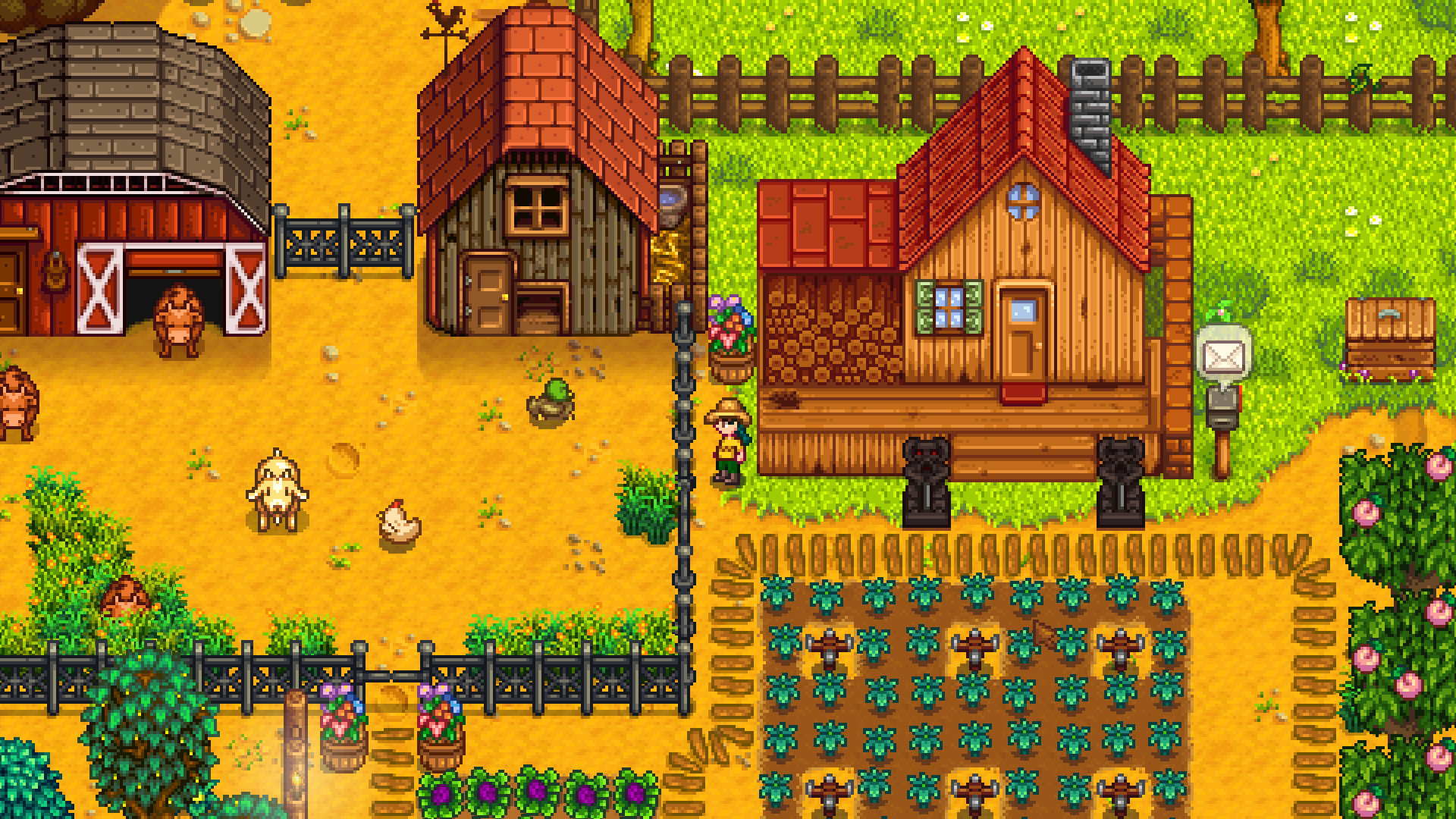
ConcernedApe — the single-person studio that is just Eric Barone — released Stardew Valley in 2016, and the conversation around it has never really stopped. That kind of sustained attention usually signals one of two things: either a game has been propped up by nostalgia and marketing momentum, or it genuinely does something that keeps pulling people back. Stardew Valley is, somewhat stubbornly, the second thing.
This is not a review trying to puncture the enthusiasm. The enthusiasm is mostly deserved. What it is, instead, is an attempt to look at which parts of Stardew Valley hold their shape after dozens of hours — and which parts work better as promise than as practice.
What the Game Actually Asks of You
The setup is deliberately light. You inherit a farm from your grandfather, arrive in Pelican Town, and the game hands you a few seeds and a watering can. What happens next is almost entirely self-directed, which is either liberating or paralyzing depending on your temperament. The game never tells you to go to the mines on day five or to prioritize the community center bundles early. You figure that out, or you don't, and either route produces a different experience.
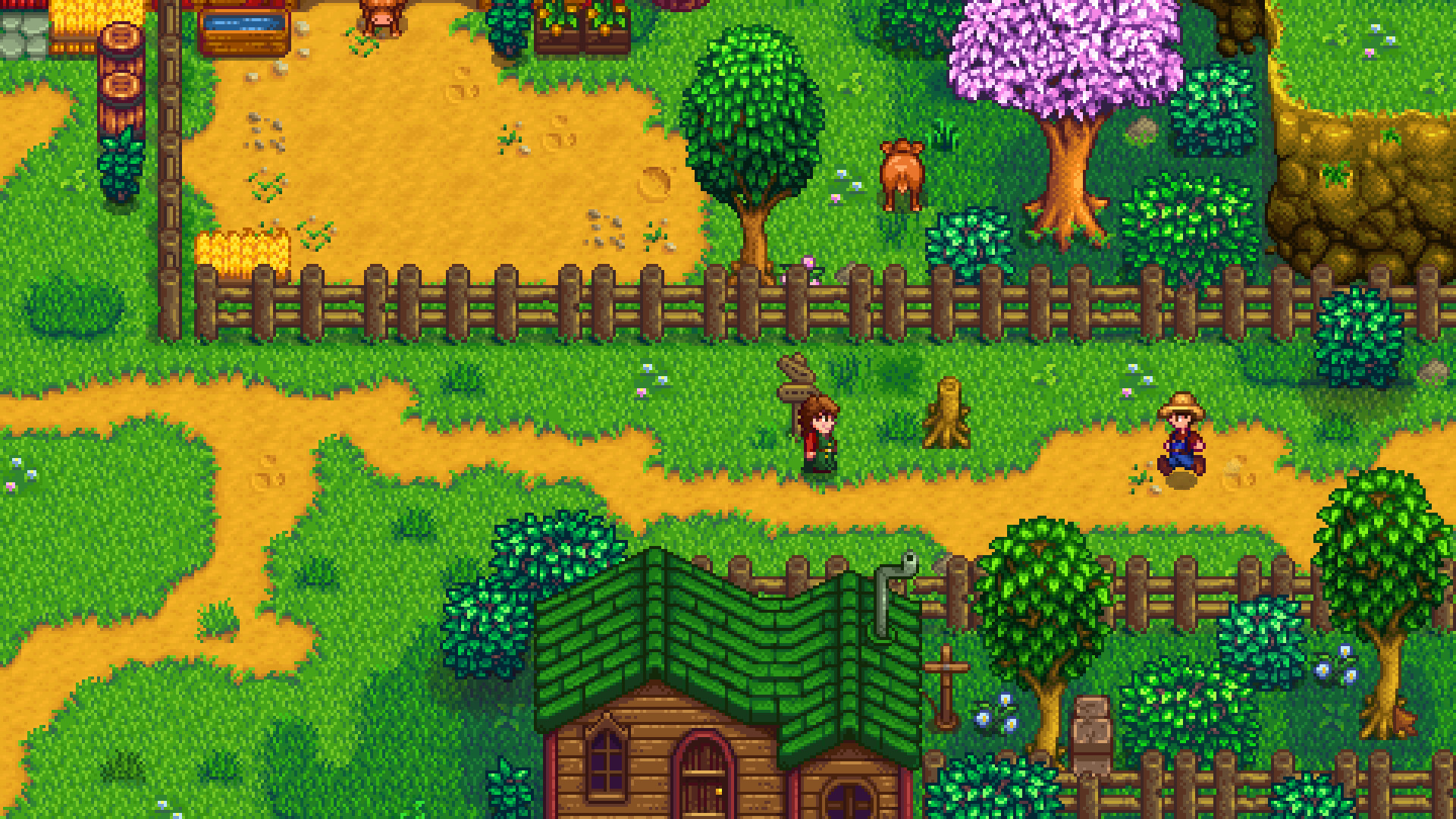 Scene from Stardew Valley.
The daily structure is tight and intentional. Each in-game day runs about fourteen real-world minutes before your character passes out at 2 a.m. That constraint does real design work. It forces prioritization: do you water the crops, go fishing, talk to the blacksmith about upgrading your pickaxe, or push deeper into the mines to find copper ore? None of these are dramatic decisions, but the aggregate of small choices creates a rhythm that is genuinely hard to put down. One more day, just one more day, and then you have lost an hour and a half.
The Mines Are More Interesting Than They Look
The dungeon system — floors of procedurally arranged caves you descend through across the game's first major arc — is often treated as the grind component, the thing you do to unlock better tools. That reading undersells it. Combat in Stardew Valley is simple, bluntly so: you swing a sword or bonk something with a club and try not to run out of food. But the mine layout creates genuine decisions about risk and resource management. Going deeper quickly means burning through food items. Going slowly means burning through the day.
The progression structure that emerges from descending the mines — better pickaxes unlocking new ore types, which unlock better equipment, which lets you go deeper — is familiar enough that it never confuses, but the pacing is well-calibrated. Reaching the bottom of the first major section of the mine system lands as a real milestone. Later mine areas change the visual palette and enemy types enough to feel like new territory, even if the mechanical core stays consistent. Whether that consistency qualifies as depth or thinness probably depends on how much you like the loop to begin with.
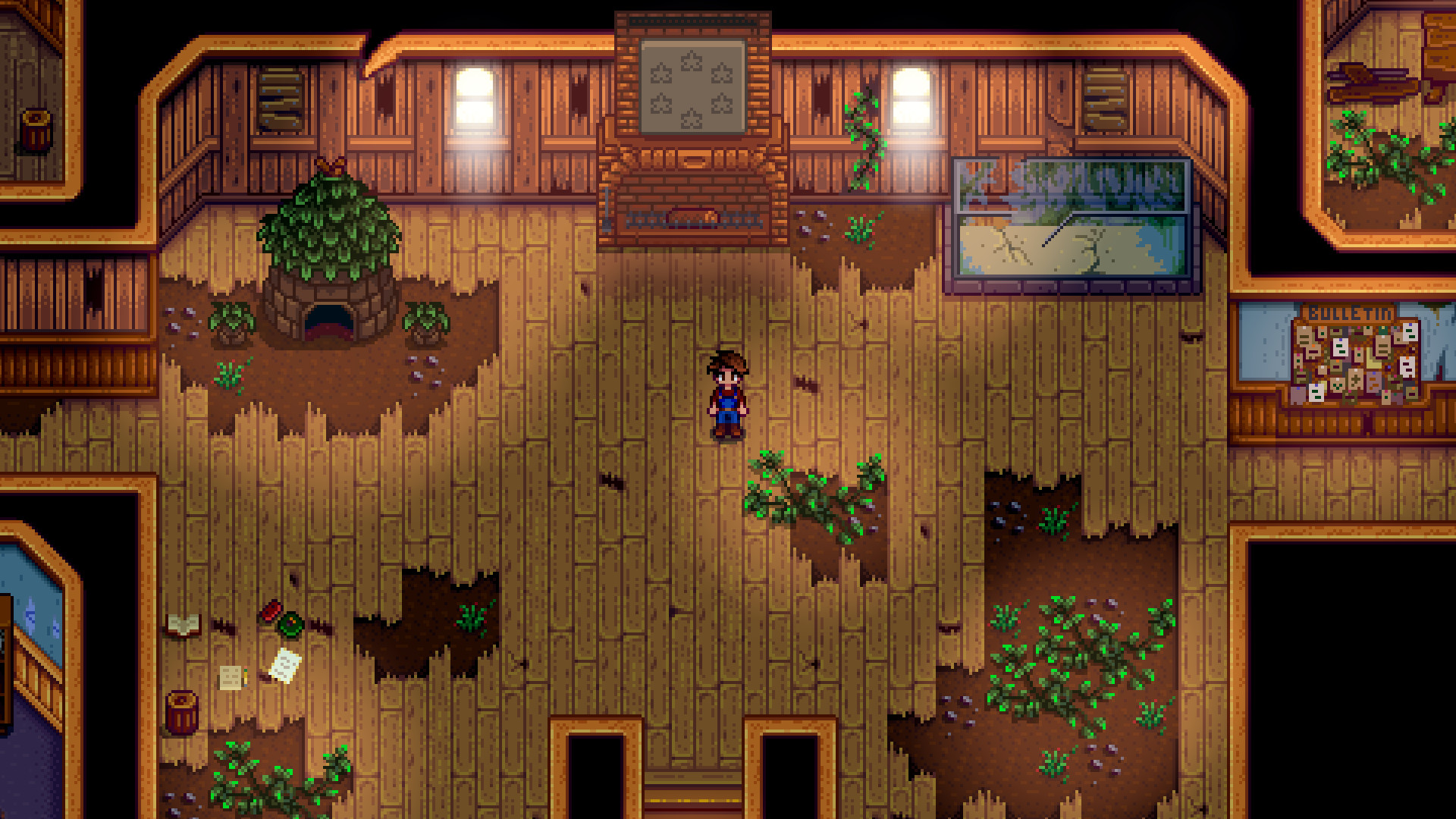 Scene from Stardew Valley.
The Town Works Harder Than Most Farming Games Bother To
Pelican Town has twelve villagers, each with a daily schedule, a set of preferences, and a relationship arc that advances as you give gifts and attend seasonal events. This is not unusual territory for the genre. What Stardew Valley does better than most is make those characters feel like they are living independent lives rather than standing in place waiting to be activated. Sebastian hangs around the lake in the evenings. Penny takes the kids to the town library. Leah splits time between the forest and the saloon. None of this is dynamic in a systemic sense, but the scripted routines are varied enough that you encounter characters naturally rather than feeling like you are checking a task list.
The relationship system does have a ceiling, and it arrives faster than you might expect. Once you have worked through a character's friendship events — cutscene vignettes that reveal backstory and personality — there is not much left to discover. The writing in these events ranges from quietly affecting to somewhat schematic, depending on the character. Haley's arc is probably the most discussed because it starts with a shallow characterization and earns its reversal. Harvey's is earnest but thin. The game is not pretending to be Disco Elysium; the writing just occasionally reminds you that it could have reached a little further.
Farming As Actual Farming
The crop economy is the backbone of the whole thing, and it is more considered than the pixel art aesthetic suggests. Different crops ripen on different schedules — some in three days, some in twelve — and seasonal transitions wipe whatever you have not harvested. Planning a field around those timelines, factoring in fertilizer quality and the profit margin on artisan goods like wine and cheese, produces a kind of spreadsheet brain engagement that is either deeply satisfying or deeply annoying. Starfruit aged into wine, processed through a keg, and sold through the shipping bin generates serious returns. Getting there requires building infrastructure across multiple in-game seasons.
Barone expanded the farming systems considerably through free post-launch updates, adding new crops, new buildings, and a second farm expansion area with different terrain. These additions slot in cleanly. The ginger island content, introduced in the 1.5 update, extends the late-game meaningfully without disrupting the early structure. It is worth noting that much of what makes the mid-to-late game feel full arrived years after launch — players who picked this up at release got a leaner product. The current version, though, is the one worth judging, and it earns the sustained attention.
Multiplayer Complicates Things, Sometimes for the Better
Co-op support — added later, also free — lets up to four players share a farm, which changes the economic logic considerably. With one player running the mines while another maintains crops and a third fishes, the resource bottlenecks that structure single-player dissolve. That is not strictly worse, just different. The communal farm creates negotiation and specialization that the solo game does not have room for.
There are friction points. Sleep mechanics require all players to agree to end the day, which sounds minor until someone is mid-dungeon. The shared money pool can create uneven contribution dynamics. And the game does not do much to scaffold the social coordination — you work it out with whoever you are playing with. For some groups that ambiguity becomes part of the fun. For others it is a source of low-grade tension. The multiplayer feels like a feature added by someone who deeply understood the solo game and was making reasonable inferences about what co-op needed, rather than someone who stress-tested it extensively.
What Holds and What Doesn't
Stardew Valley holds up because its core loop is genuinely well-constructed. The fourteen-minute day, the seasonal crop windows, the mine descent as counterpoint to surface farming — these systems reinforce each other in ways that produce compulsion without feeling manipulative. There are games with more sophisticated mechanics in each individual category: Rune Factory 5 has deeper combat, Farming Simulator has more realistic agricultural systems, Spiritfarer has stronger writing. Stardew Valley does not win any single category. It wins the integration.
The parts that wear thin are real but mostly minor. The combat stays simple past the point where simple is a design choice and starts feeling like a resource constraint. Some of the town characters plateau quickly. The game's final story content, involving the Junimos and the community center, is lighter on payoff than the buildup suggests. None of this is enough to undercut the whole. Eric Barone made something that a large number of people have played for a hundred hours, and the hours have a reason behind them. That is not nothing — in a market full of bloated, obligation-generating open-world releases, it is actually fairly rare.
Editorial scoring
Reader Q&A
How long does it take to finish Stardew Valley Gave Me a Farm and Took My Weekends?
Main story runs around 32 hours depending on how thoroughly you explore. Completionists can spend 2-3× that.
Is Stardew Valley Gave Me a Farm and Took My Weekends good for newcomers to Farming Sim?
It depends. The systems are deep but the tutorial does a fair job. Veterans of Farming Sim will feel at home faster.
Which platform should I play Stardew Valley Gave Me a Farm and Took My Weekends on?
Console version is the most stable on launch. PC version benefits from the modding scene long-term.
Was Stardew Valley Gave Me a Farm and Took My Weekends worth the launch-day price?
Released in 2016, and as of writing it holds up. Wait for a sale if you're price-sensitive — major discounts arrive within 6 months.
Are there DLCs or expansions worth picking up?
Wait for the Game of the Year edition — it bundles everything at a fair discount.
What did ConcernedApe get right (and what could be better)?
ConcernedApe nailed the moment-to-moment loop and the world-building. Pacing in the mid-game and inventory UX have room for improvement.
Reader comments