Risk of Rain 2 Gets Better the Worse It Goes
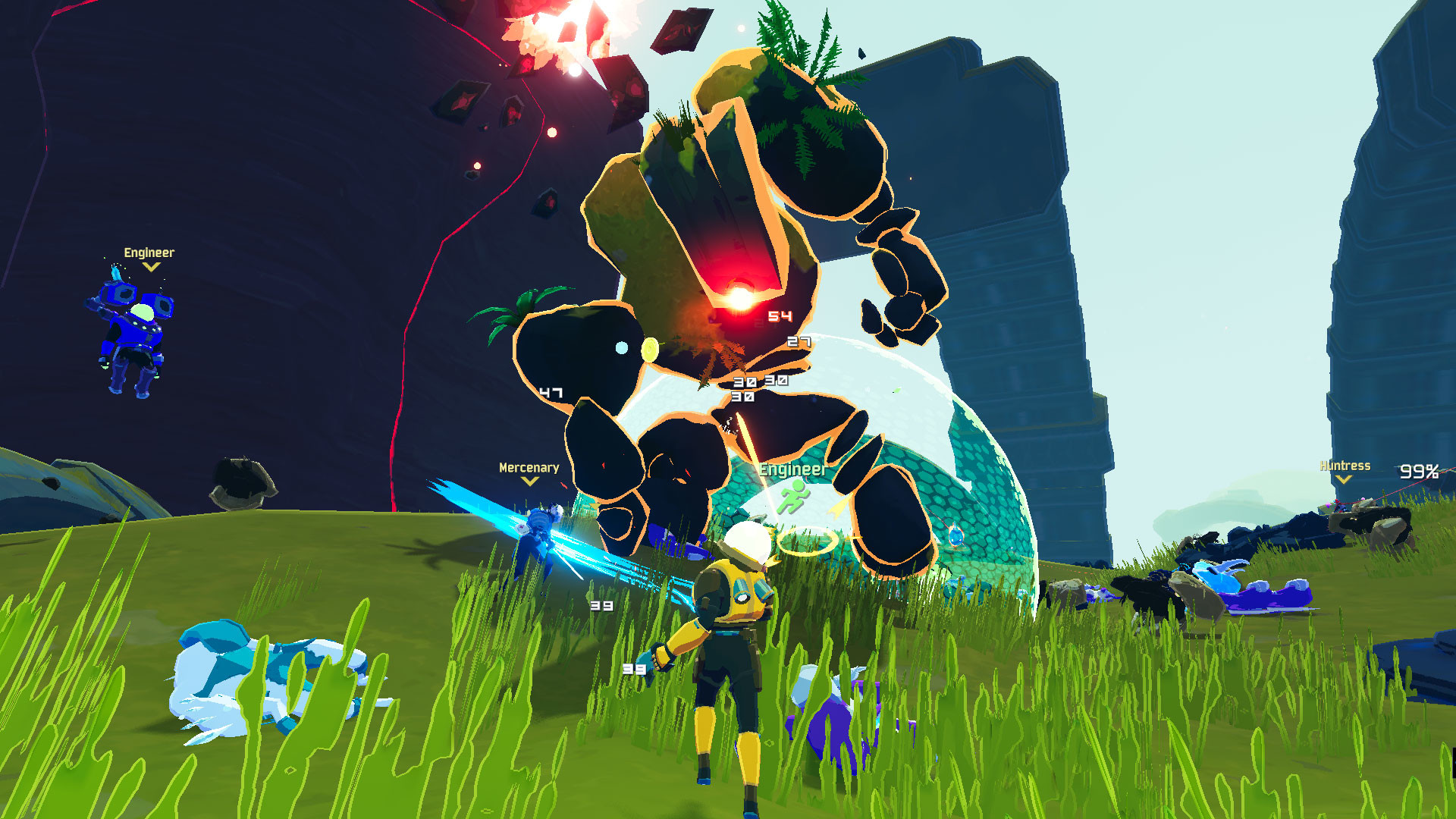
Risk of Rain 2 is a game that reveals itself slowly, and not always on your schedule. The first hour is disorienting in a specific way — not because the controls are awkward or the UI is cluttered, but because nothing has gone catastrophically wrong yet. You clear the first area, grab some items, shoot a few oversized arthropods, and think: fine, that's fine. Then the scaling kicks in. Enemies balloon in health and aggression. Your character either keeps pace or crumbles. That threshold, the moment you realize your build isn't a build so much as a pile of components you picked up without reading, is where the game actually begins.
Hopoo Games released Risk of Rain 2 into early access in 2019, which already feels like a different era of the genre. The roguelite space was comparatively less crowded then. Since full release, the game has aged into a catalog standard — the kind of thing recommended in the same breath as Hades or Dead Cells, which is both fair and slightly reductive. Because Risk of Rain 2 does something those games don't, not better necessarily, but differently. It's a third-person action game played at escalating speed inside a feedback loop that genuinely does not care about you.
The Loop Is the Point
Every run follows a structure you learn fast: land in an area, kill enough enemies to open the teleporter, survive a boss, move on. Repeat across escalating environments until you die or finish. Simple on paper. In practice the tension comes from time. The longer you stay in any zone, the harder the enemies get. Standing still and farming items is a trap. You're always being pushed toward the teleporter even when your inventory feels incomplete, and that pressure is almost entirely self-imposed. The game doesn't scream at you. It just makes enemies slightly larger, slightly faster, until the message lands.
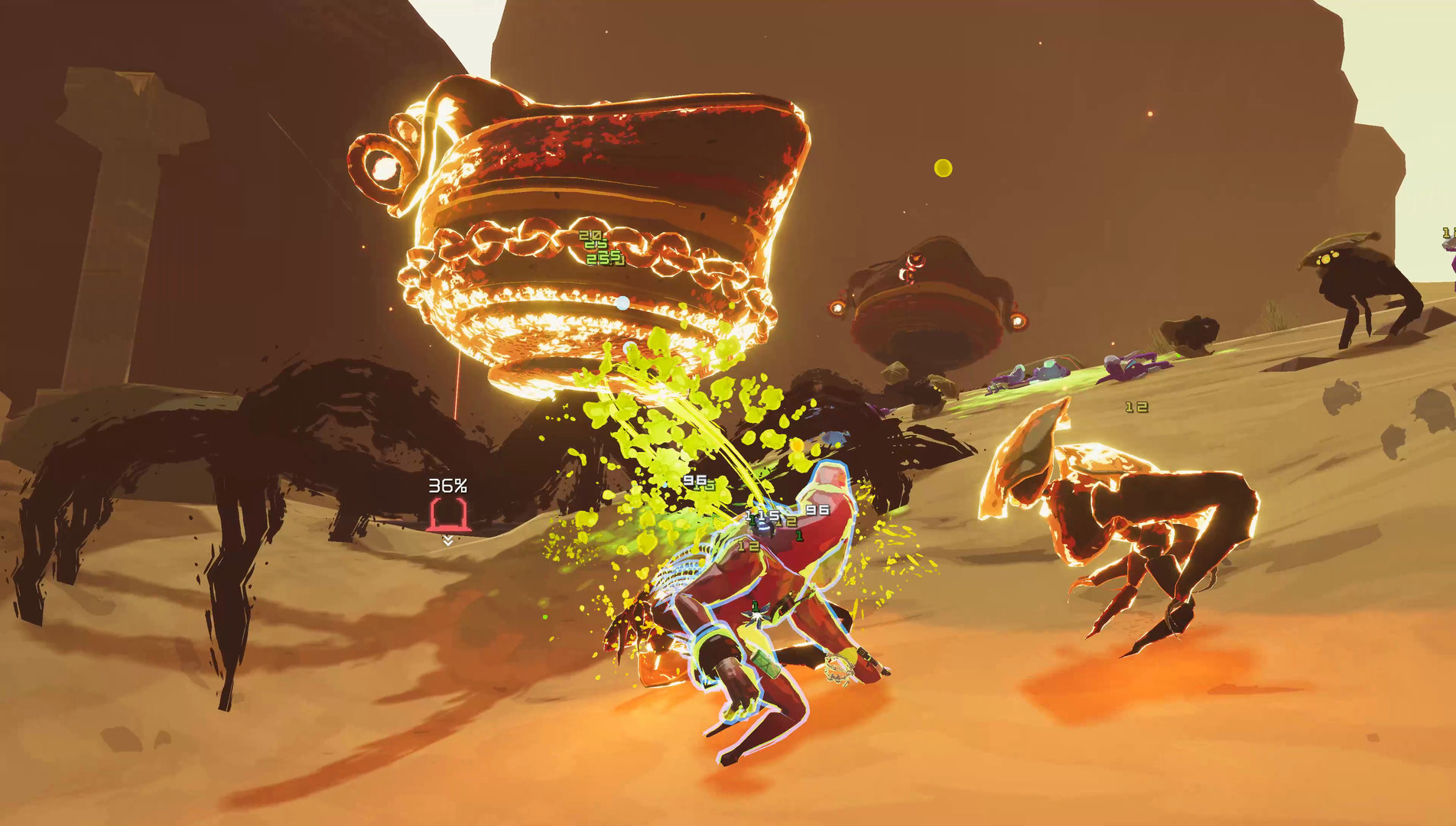 Scene from Risk of Rain 2.
The item system is where runs differentiate themselves. Items drop from enemies and chests, and they stack — each copy of an item compounds its effect. A single Soldier's Syringe speeds your attack slightly. Four of them turn you into something approaching a hardware problem. The variance here is enormous and intentional. Some runs coalesce around a coherent theme almost by accident; you'll exit the second zone with six copies of an item that triggers chain lightning and suddenly the entire middle section of your run plays differently than any previous attempt. Other runs just don't click, and that's not a failure state so much as information.
Survivor Design Is Where Hopoo Gets Interesting
The game ships with a roster of unlockable survivors, and each one reframes the core loop in ways that feel more fundamental than character-select menus usually do. The Commando is deliberately plain — a starter character who teaches you the rhythm without imposing on it. The Huntress is fragile but brings homing attacks that change your relationship with positioning. The Engineer places turrets and manages space in a way that turns crowd control into architecture. None of these are exotic observations, but they matter because the survivors aren't just reskins of the same verb set. Switching characters between runs is the closest thing the game has to a difficulty toggle.
The Loader is a particular favorite in a lot of circles, and it's easy to understand why. A grappling hook in a three-dimensional arena with this many enemies turns the game into something adjacent to spectacle. The MUL-T offering two active items simultaneously is a small systems decision that quietly rewires how you approach chests. Loader's movement, though — and I'll admit this is partly personal preference — sometimes makes encounters feel less tense rather than more, because outrunning problems is always available. The game is best when resources are scarce and time is short, and a character who can simply leave a situation undermines that slightly.
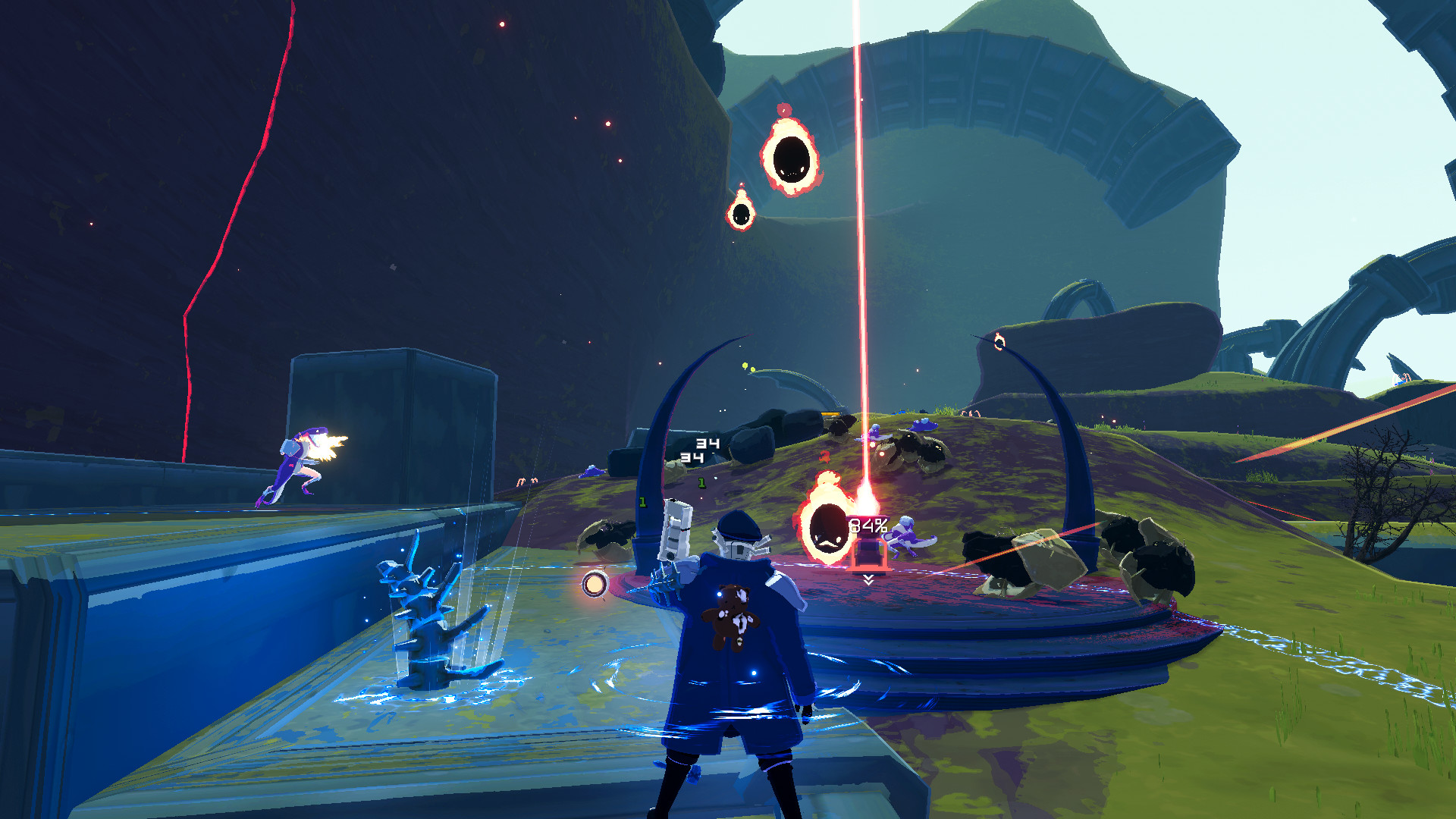 Scene from Risk of Rain 2.
When the Scaling Tips Over Into Chaos
The difficulty curve in Risk of Rain 2 is not smooth. It's more like a ramp that suddenly becomes a cliff. Drizzle — the easiest setting — is almost too forgiving; runs reach late stages without demanding much decision-making. Monsoon, the hardest baseline option, can end runs in moments that feel arbitrary rather than instructive. That gap matters. There's a specific frustration in dying to a one-shot attack from an enemy you couldn't see because fifteen other enemies were obscuring the screen, and trying to figure out what you should have done differently. Sometimes the answer is nothing. The game's camera in dense encounters can be its own adversary.
This is less a condemnation than an honest description of what kind of game it is. Risk of Rain 2 is occasionally messy in ways that feel like they belong to it — where a tighter, more carefully paced roguelite would clean up the rough moments, this one lets them stand. The late stages of a long run, where your character is throwing out enough visual noise to read as a light show and enemies are massive and numerous, have a particular quality that's hard to call polished. It might be chaos. It also might be exactly right.
Multiplayer Changes the Texture Completely
The game supports co-op up to four players, and this alters the feel in ways both mechanical and atmospheric. Item drops scale with player count. Enemies scale harder. Teleporter bosses become genuine coordination problems. Solo runs have a particular isolated quality — it's you versus a hostile planet that's indifferent to your survival. Multiplayer runs feel more like controlled chaos with a social layer that smooths over some frustrations while introducing new ones. Blame is now distributable, which is its own kind of relief.
The item stacking system behaves differently across player counts in ways that reward experimentation. One player can build around a specific item synergy cleanly; four players often generate an item ecosystem where nobody fully controls the direction, and you end up with emergent combinations nobody planned. That's either a feature or a bug depending on how much you value intentionality in build-crafting. Hades, for comparison, keeps its power progression tighter and more readable. Risk of Rain 2 accepts a higher noise floor in exchange for something that feels closer to genuine surprise.
The Loop You Return To
There's a version of this game that would feel tedious after the first dozen hours — same zones, same enemy types, same item pool. Risk of Rain 2 avoids that mostly through scaling rather than variety. The environments aren't the draw. The draw is what happens to a character over the course of forty minutes when stacking numbers interact in unexpected ways. That's a narrower appeal than some of its contemporaries, but it's genuine.
It's also a game that gets better as it gets worse. The most memorable runs aren't the clean ones where everything clicked and you cruised to the final boss. They're the runs where the build was wrong, the enemies were everywhere, and you made it through anyway on bad decisions stacked under pressure. That specific experience — cobbling together something that shouldn't work and watching it almost work — is what Hopoo built this around. Whether it lands for you depends entirely on your tolerance for systems that treat your discomfort as the product.
Risk of Rain 2 isn't the most refined game in its genre, and it doesn't try to be. It's a game about entropy and acceleration, about staying in a situation one moment longer than you should and seeing what that costs. That's not comfort food. It's closer to a sparring partner you keep coming back to because it keeps finding the gap.
Editorial scoring
Reader Q&A
How long does it take to finish Risk of Rain 2 Gets Better the Worse It Goes?
Main story runs around 120 hours depending on how thoroughly you explore. Completionists can spend 2-3× that.
Is Risk of Rain 2 Gets Better the Worse It Goes good for newcomers to 3D Roguelite?
It depends. The systems are deep but the tutorial does a fair job. Veterans of 3D Roguelite will feel at home faster.
Which platform should I play Risk of Rain 2 Gets Better the Worse It Goes on?
Steam Deck handles this title well — verified compatibility on most recent patches.
Was Risk of Rain 2 Gets Better the Worse It Goes worth the launch-day price?
If you're a fan of Hopoo Games, yes. If you're new to the studio, a sale price is more comfortable.
Are there DLCs or expansions worth picking up?
Skip the cosmetic DLC. The story expansion is the only one we'd recommend at full price.
What did Hopoo Games get right (and what could be better)?
Hopoo Games nailed the moment-to-moment loop and the world-building. Pacing in the mid-game and inventory UX have room for improvement.
Reader comments