Monster Train Never Lets You Build in Peace — That's the Point
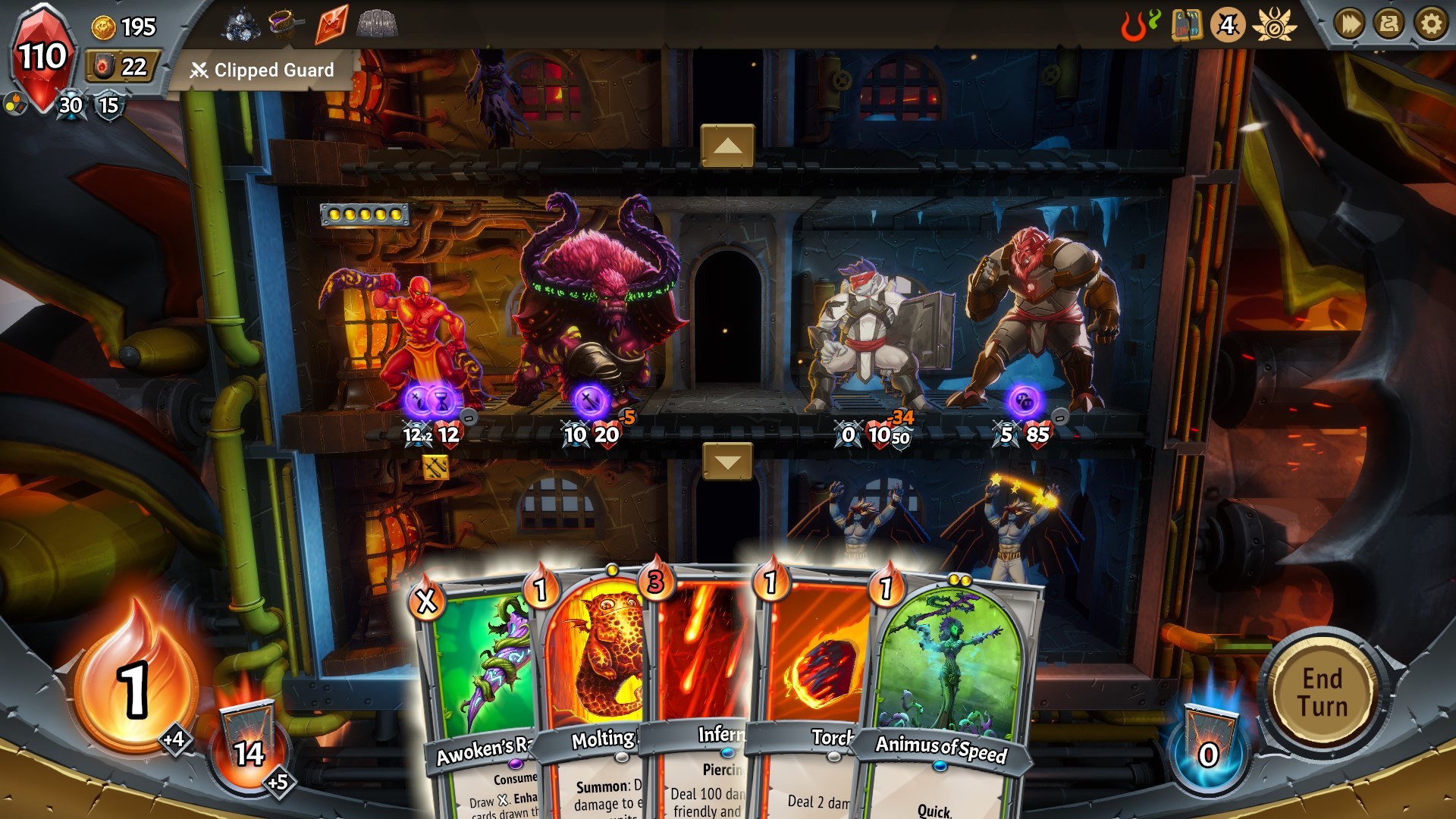
Monster Train drops you into its systems the way a contractor hands you a power tool without the manual — expecting you to figure out the safety catch on your own. Shiny Shoe's 2020 deck-builder gives you a hell-train carrying the last pyre of Hell, a handful of monster units to place across three floors, and a combat structure that rewards stacking a single, deeply weird synergy over building sensible, balanced decks. The game doesn't ease you in so much as it assumes you'll find the edges by running into them.
That premise sounds straightforward enough. Defend your pyre. Kill the angels. Repeat. But Monster Train is one of those games where the distance between knowing the rules and understanding what's actually happening to your deck can take several full runs to close. Whether that gap feels exciting or exhausting depends heavily on your tolerance for iterative discovery — and, honestly, on how much the game's visual style speaks to you. It doesn't have Slay the Spire's clean iconography or Hades' mythological warmth. It has a kind of deliberate grunge that some players love immediately and others never warm up to.
The Three-Floor Architecture Is the Real Mechanic
Most deck-builders resolve combat in a flat, abstract space. Monster Train refuses that abstraction. The angel horde enters at the bottom floor and fights upward toward your pyre at the top, which means your choices about where to place units have genuine tactical weight. Put your heaviest unit on floor one and it might stall a wave long enough for your pyre to charge. Put it on the top floor and you're side activity — expecting — that nothing will make it past your weaker defenders below.
 Scene from Monster Train.
This vertical structure creates pressure that most card games generate through resource scarcity alone. You're managing positioning, not just hand size. And when a run starts clicking — when your floor-one tank has a regeneration loop that keeps it alive indefinitely while your top-floor spellcaster drops area damage each turn — the resulting machinery feels almost architectural. You built something. It has a logic. The game then spends its final act trying to tear it down.
The modifier system layered on top of this — the Covenant ranks, essentially a difficulty ladder — pushes runs in sharp new directions without feeling arbitrary. Higher Covenants introduce constraints that reframe how certain clan combinations work, which is smart design: it doesn't just make enemies hit harder, it warps the problem you're solving.
Clan Synergies: The Best and Worst of the Design
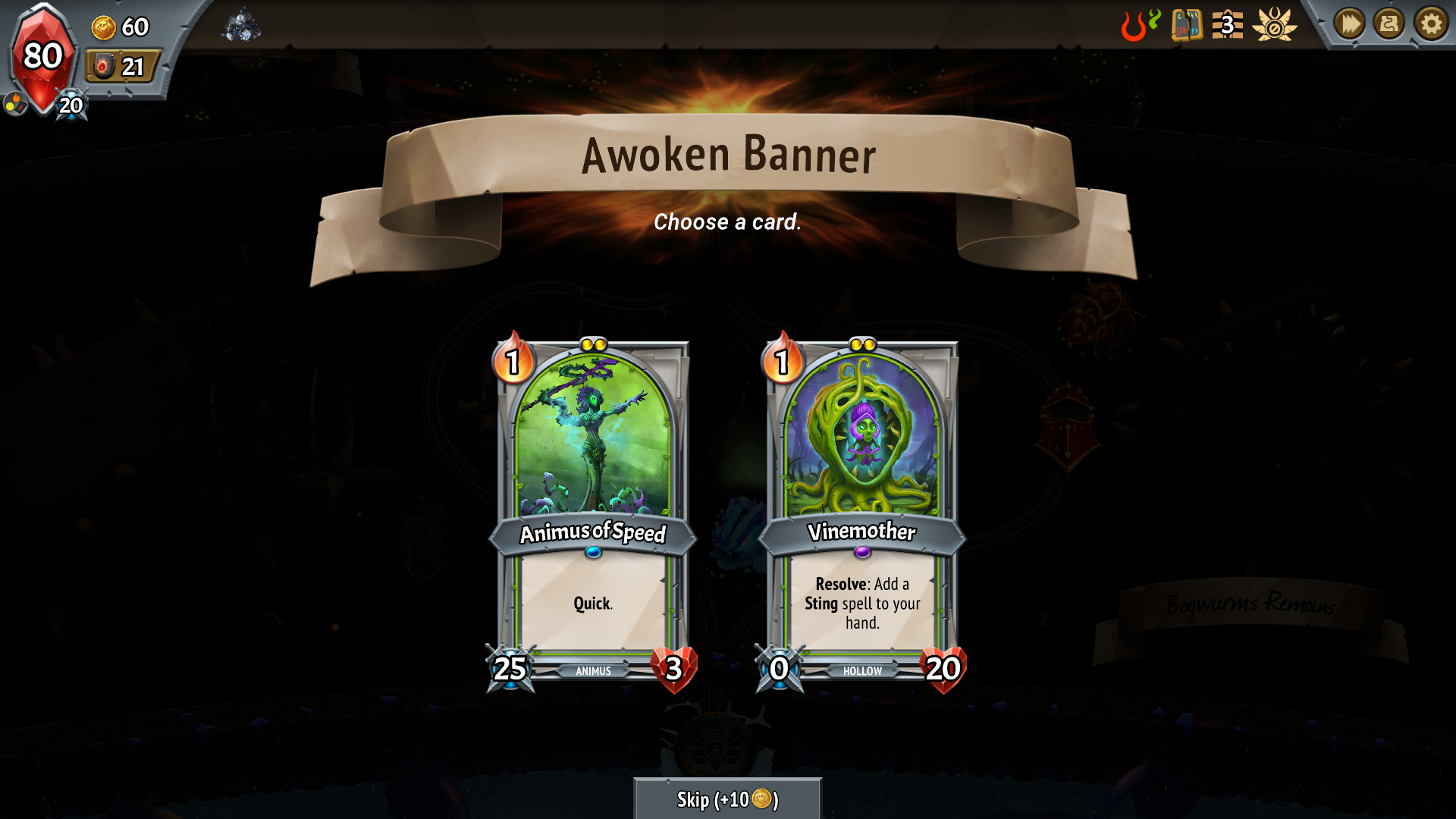
Monster Train ships with five hellish clans and one angelic faction you can use as a secondary pick. Each clan has a mechanical identity strong enough to play as a genre unto itself. The Awoken want you to grow massive plant units with ember-hungry spells. The Melting Remnant wants units that reform into stronger versions of themselves when they die. The Stygian Guard wants you to cast spells twice through an echo mechanic. These aren't interchangeable flavors — they're genuinely different games sharing a frame.
 Scene from Monster Train.
The cross-clan synergies are where Monster Train earns its most devoted playerbase. Pairing the Melting Remnant's death-and-reform cycle with a secondary clan that buffs units entering the field can produce self-reinforcing engine loops that feel genuinely discovered, not handed to you. The card pool is large enough that a strong synergy in one run might go completely invisible in another. That variance keeps experienced players engaged across dozens of hours.
The flip side: some clan pairings are quietly outclassed by others, and the game is reluctant to telegraph this. You can spend a full run investing in a cross-clan combo only to hit the boss gauntlet and realize the synergy you built is structurally fragile against certain enemy types. That's partly the point — iterative learning — but it can feel less like discovery and more like tax on runs that were already mid-tier from the draft.
The Pacing Problem, Honestly Stated
A single run in Monster Train takes somewhere between 45 minutes and an hour and a half, depending on how deeply you read card tooltips and how complex your engine gets. That's longer than a Slay the Spire run at a comparable stage, and it matters because the early-run draft — where you're choosing clan secondaries and picking opening relics — doesn't always produce interesting decisions. Some starts are just more constrained than others, and you'll know it by floor three.
The game also has a mid-run momentum issue. The middle third — after your core engine emerges but before the boss escalation starts applying real pressure — can feel like maintenance rather than play. You're clicking through combats that your current deck handles comfortably, upgrading cards incrementally, waiting for the next meaningful choice. Slay the Spire manages this better, partly because its run length is shorter and partly because its elite enemies apply consistent pressure throughout. Monster Train bunches its difficulty toward the finale.
What Shiny Shoe Gets Right About Roguelike Tension
The boss fights are genuinely excellent. Each one has a specific mechanical signature that pressures different deck archetypes differently — one boss accelerates the angel horde in ways that punish slow engines, another directly targets your highest-health unit each turn, which can dismantle a floor-stacking strategy entirely. The design doesn't just increase numbers; it changes what you need to do. That's the correct way to construct difficulty in a card game.
The final boss sequence — and I'll avoid specifics here since encountering it cold is half the experience — reframes everything the run has built in one sharp structural move. It's the game's best argument for its own design. Everything Shiny Shoe has been teaching you about floor management and unit placement converges into something that feels earned if you've been paying attention. It's the kind of moment that makes you want to immediately start a new run with what you just learned.
There's also something worth noting about the game's card-upgrade system. Most deck-builders let you upgrade any card. Monster Train uses a limited upgrade mechanism that forces prioritization — you can't polish everything, so you have to decide which cards are actually central to your strategy versus which ones are just filler you drafted because nothing better appeared. That constraint produces better decision-making under pressure than unlimited upgrade systems do.
Who This Game Is Actually For
Monster Train rewards a specific kind of player: someone who finds systems interesting at the level of interaction, not just outcome. If your enjoyment of Slay the Spire or Inscryption came from understanding why a build worked — tracing the chain of triggers that made a single card overpowered in a specific context — Monster Train will hold your attention for a long time. Its mechanical ceiling is high. The Covenant difficulty ladder and the multi-clan combination space give experienced players genuine variety across 40, 50, 80 hours.
If you're newer to the genre, or if you want a game that's generous with early feedback, Monster Train is harder to recommend without qualification. The tutorial exists but doesn't cover enough. The interface, while functional, can obscure how certain triggers stack until you've already committed to a card choice. There's a real possibility you'll finish several runs without fully understanding what you built or why it won. For some players that's the appeal. For others it's just friction.
Verdict
Monster Train is a well-constructed deck-builder with some pacing roughness and a steeper knowledge curve than it acknowledges. The three-floor combat system is the genre's smartest structural idea in years, the boss designs are properly challenging, and the clan combination space is wide enough to sustain extended play. It drags occasionally in the mid-run, and a few clan pairings feel underpowered in ways the game doesn't advertise. These are real costs. They don't erase what the game does right — but they're worth knowing before you sit down for your first 90-minute run only to realize you've been building toward a dead end since floor four.
The games that stick with you after you've stopped playing them tend to be ones where you keep mentally revising your approach. Monster Train is that kind of game. It follows you out of the session.
Editorial scoring
Reader Q&A
How long does it take to finish Monster Train Never Lets You Build in Peace — That's the Point?
Main story runs around 24 hours depending on how thoroughly you explore. Completionists can spend 2-3× that.
Is Monster Train Never Lets You Build in Peace — That's the Point good for newcomers to Roguelike Deck-builder?
Yes — Monster Train Never Lets You Build in Peace — That's the Point is a great entry point. The early hours teach the systems gradually and the difficulty curve is reasonable.
Which platform should I play Monster Train Never Lets You Build in Peace — That's the Point on?
Steam Deck handles this title well — verified compatibility on most recent patches.
Was Monster Train Never Lets You Build in Peace — That's the Point worth the launch-day price?
Released in 2020, and as of writing it holds up. Wait for a sale if you're price-sensitive — major discounts arrive within 6 months.
Are there DLCs or expansions worth picking up?
Wait for the Game of the Year edition — it bundles everything at a fair discount.
What did Shiny Shoe get right (and what could be better)?
The systems are confident and the combat is satisfying. The story handoffs and load times are the rough spots.
Reader comments