Guilty Gear Strive Is Beautiful, Brutal, and Barely Teaches You Anything
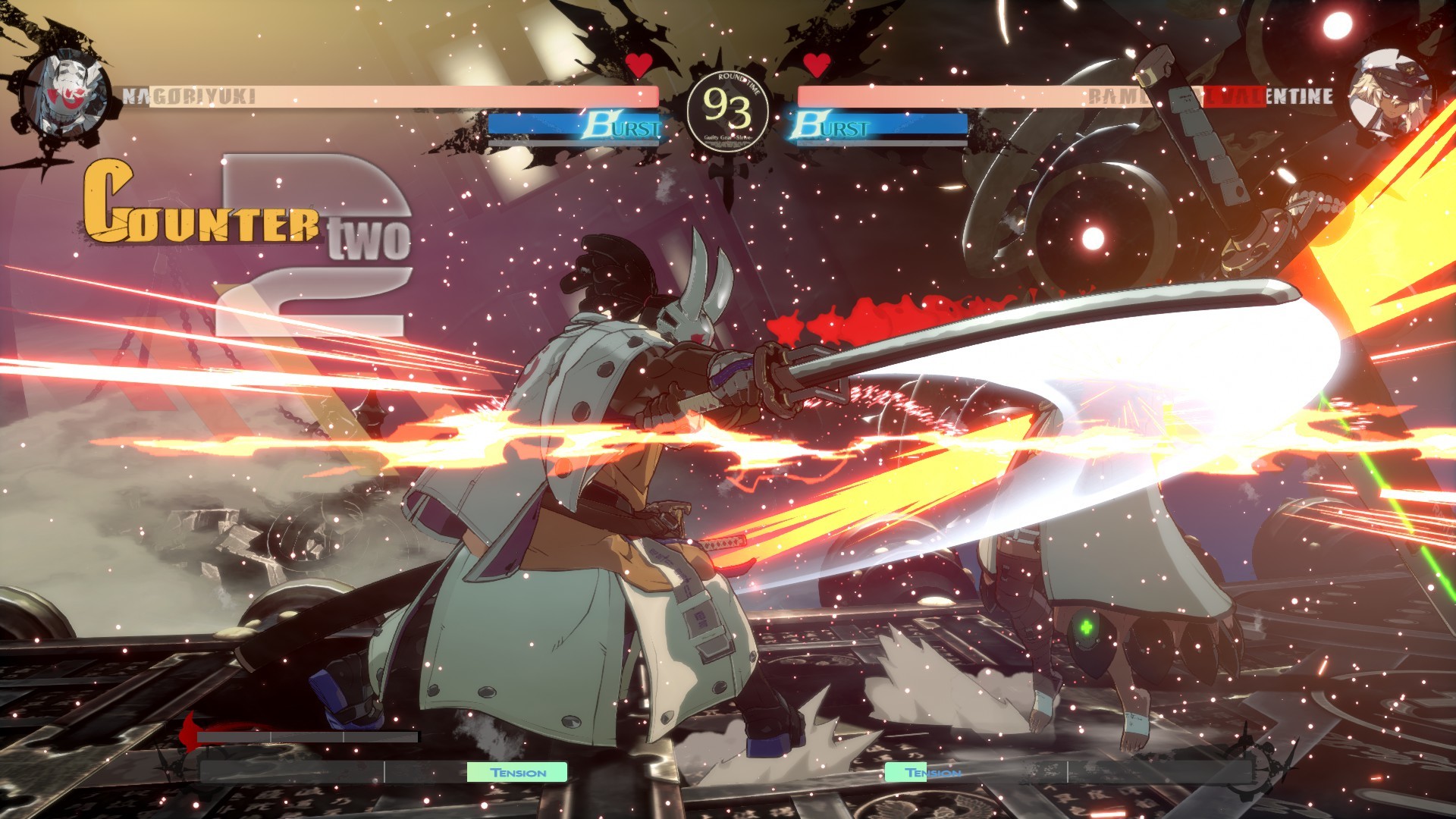
Guilty Gear Strive is one of the most visually striking fighting games ever made. That sentence doesn't need qualification. Arc System Works built something that looks like animated manga panels in motion — character models with hand-painted shading, backgrounds dense with moving parts and color, hit effects that read as pure kinetic energy rather than visual noise. You can watch a round of Sol Badguy versus Ramlethal Valentine and feel like you're watching a short film that happens to be interactive.
What the game doesn't do is explain itself. Not really. The tutorial covers inputs and basic mechanics with reasonable patience, but the distance between 'understanding Strive's tutorial' and 'understanding why you keep losing in ranked' is vast — and Arc System Works leaves you to cross it mostly alone. That gap defines the experience for a certain kind of player, and it's worth being direct about who Strive quietly favors and who it quietly exhausts.
A Fighting Game That Wears Its Ambition Loudly
There's a version of Strive that functions as an approachable entry point to the Guilty Gear series. The roster is smaller than previous entries, the move lists are trimmed, and the core systems are — relative to Guilty Gear Xrd or the older XX games — more immediately legible. Roman Cancel, Strive's signature mechanic for extending pressure or escaping dangerous situations, is explained clearly enough. You can learn what it does in about ten minutes.
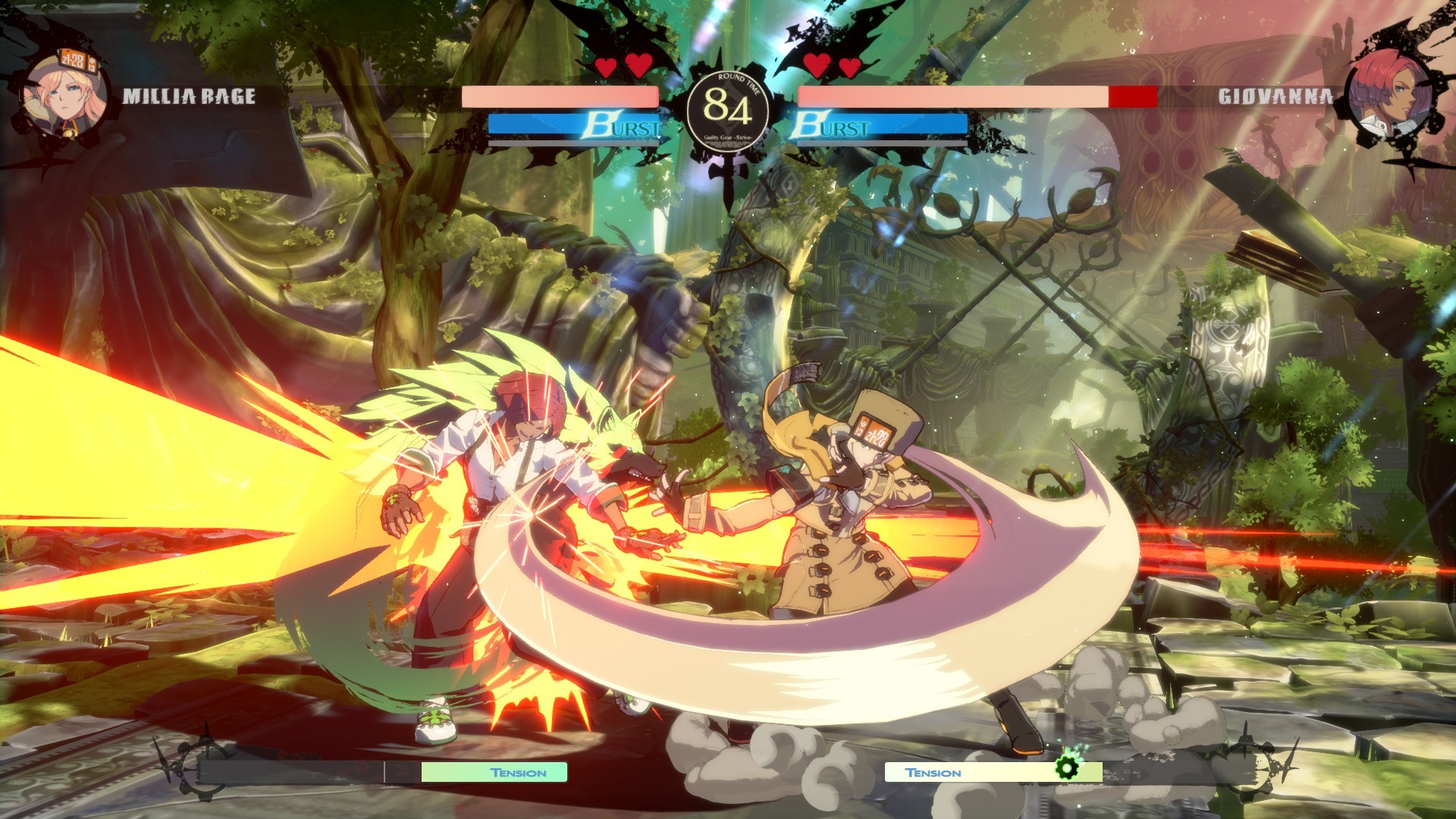 Atmospheric detail in Guilty Gear Strive.
Learning when to use it, and what you're actually opening up when you do, takes considerably longer. Strive's neutral game — the positioning dance before a commitment — rewards players who already have a framework for reading spacing and timing. A newcomer pressing buttons often has no idea whether they're winning neutral or simply getting away with something. That distinction matters enormously, because Strive is brutal about punishing players who don't know the difference. Miss your window on a whiffed attack from an opponent? They get a full combo. The feedback for mistakes is clear. The instruction for how to avoid those mistakes is not.
The Presentation Does Real Work
It would be easy to call the visual style a coat of paint over a conventional fighting game engine. It isn't. The animation quality changes how you read the game. Attacks have weight and recovery frames that are visually legible in a way that, say, Street Fighter V's more mechanical style doesn't quite match. When Zato-1 summons Eddie and starts layering puppet pressure, you can see the attack strings as a kind of rhythm — there's visual grammar happening alongside mechanical grammar.
The stage design deserves mention too. Each background is its own world — crumbling Gothic architecture, industrial harbors with ships moving in the distance, neon-lit urban spaces. None of it is interactive, but the density of motion in the background creates the feeling of combat happening inside a living space rather than on a flat surface. It's a detail that becomes invisible when it works, which is the best kind of design. The character portraits and win-screen animations carry that same commitment — this is a team that cared about every frame.
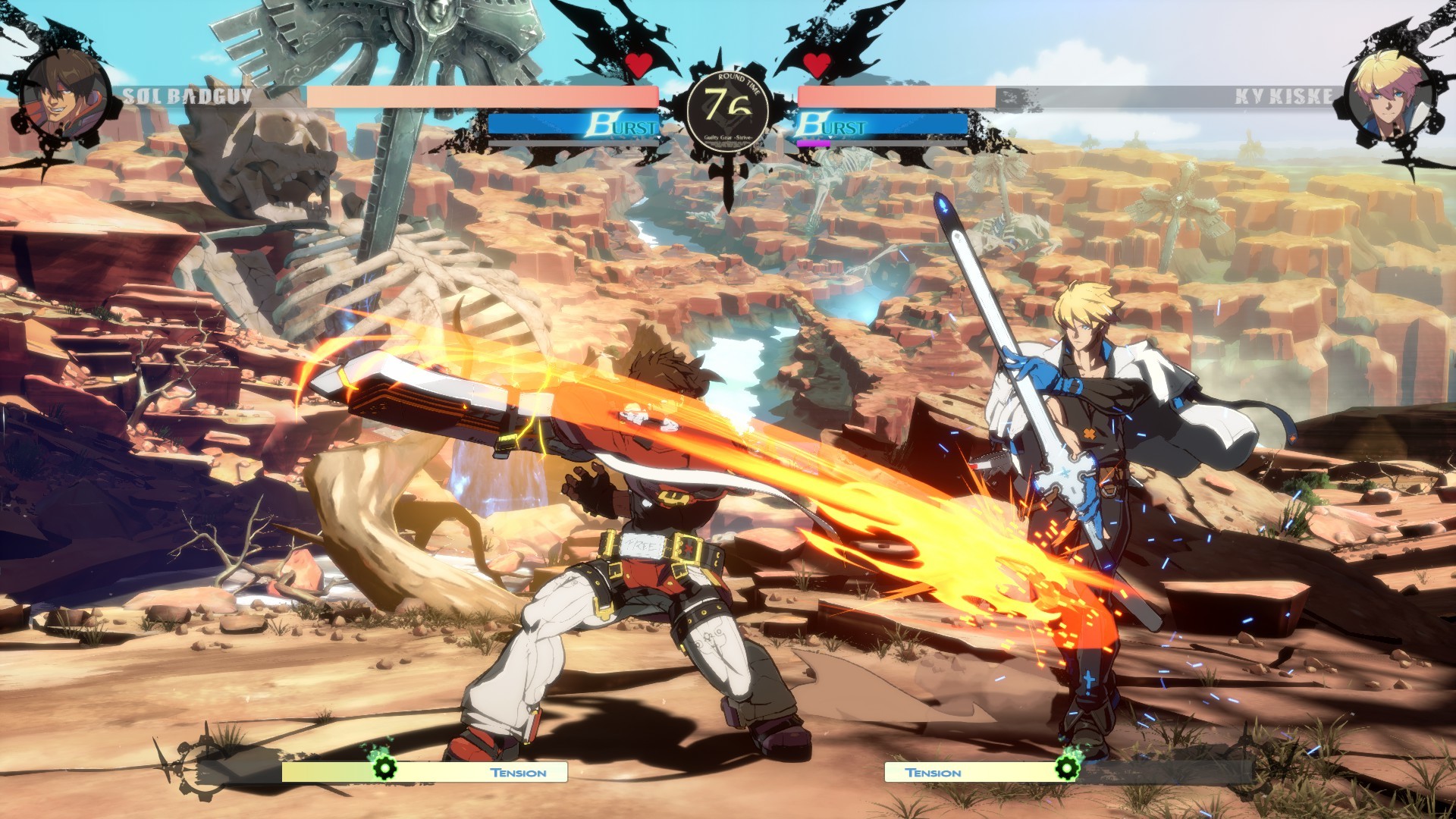 Combat encounter in Guilty Gear Strive.
The Story Mode Is a Fascinating Problem
Strive's story mode is, by conventional standards, not a story mode. It's closer to an animated film — long cutscenes, minimal interactivity, a few short combat segments scattered across several hours of narrative. Arc System Works clearly put resources into it, and for players already deep in Guilty Gear's dense lore, there's genuine payoff. Character relationships land with more weight when you've spent time with earlier entries.
For new players, it's a lot to absorb with very little scaffolding. The game doesn't recap the prior timeline in any meaningful way. You're thrown into a conflict involving characters with decades of history, and the story assumes either that you've done outside reading or that you'll simply enjoy the spectacle and fill in context later. As a piece of animation it largely succeeds. As a point of entry into the Guilty Gear universe, it's less successful — the narrative density feels like a wall rather than an invitation.
Online Play and the Invisible Skill Ceiling
Strive launched with a new tower-based matchmaking system — players move between floors based on wins and losses, with higher floors representing more experienced competition. The concept is reasonable. In practice, the lower floors act as a kind of pressure cooker where newer players encounter opponents who have deliberately kept themselves there to farm wins. It's a known issue with floor-based systems, and while patches have adjusted the experience over time, it remains a friction point for players still learning the fundamentals.
The rollback netcode, though, is genuinely good. Matches feel tight even on connections that would produce slideshow gameplay in older fighters. That's not a small thing — bad netcode can make skill development nearly impossible because you can't trust that what you're seeing reflects what's actually happening. Strive's online infrastructure does the basic job well, and that basic job turns out to matter a great deal for a game where learning depends so heavily on repetition against other people.
Who This Game Is Actually For
Strive markets itself with accessible framing — simplified systems, modern controls in later updates, a single-player offering. But the experience underneath those concessions is still a high-skill-ceiling fighting game that rewards players with patience for unguided learning and an appetite for repeated, analytical failure. Players who enjoy dissecting a loss — watching replays, identifying the gap in a defensive sequence, adjusting their neutral habits in the next session — will find Strive enormously satisfying.
Players who want the game to meet them halfway — who want loss to feel instructive rather than just punishing — may find the gap between intent and feedback frustrating. Strive doesn't hold grudges, but it doesn't explain itself either. The mission mode offers combo challenges and situational exercises, and those are useful. What's missing is the analytical layer that something like Tekken 8's replays-with-coaching-data gestures toward, however imperfectly. Strive trusts you to figure it out. Not everyone finds that trust energizing.
The Soundtrack Deserves Its Own Paragraph
Daisuke Ishiwatari composed Strive's soundtrack and it is, without exaggeration, one of the best fighting game OSTs in recent memory. Each character has a theme that functions as musical characterization — Giovanna's track leans into fast rock with a melody that feels urgent and compact, Nagoriyuki's reflects his more measured, tragic framing. The music doesn't sit in the background. It participates in the match.
This is worth flagging because fighting game music is often assessed as wallpaper — pleasant enough, forgotten immediately. Strive's OST is the kind of thing that players actively seek out on streaming services, and it's not hard to see why. There's craft here beyond 'energetic music for fighting.' The composition takes the characters seriously as subjects.
Strive is a genuinely excellent fighting game and a frustrating teaching tool in almost equal measure. The presentation is committed, the mechanics are deep without being impenetrable, and the ceiling — once you start clearing the lower floors and hitting players who really know what they're doing — is high enough to sustain interest for hundreds of hours. What it doesn't do is guide you there, and that's a real cost for players who need a more visible path forward. If you're willing to sit with confusion for longer than feels comfortable, Strive pays out. If you need the game to explain why you lost, you'll spend a lot of time guessing.
Editorial scoring
Reader Q&A
How long does it take to finish Guilty Gear Strive Is Beautiful, Brutal, and Barely Teaches You Anything?
Main story runs around 120 hours depending on how thoroughly you explore. Completionists can spend 2-3× that.
Is Guilty Gear Strive Is Beautiful, Brutal, and Barely Teaches You Anything good for newcomers to Fighting?
Yes — Guilty Gear Strive Is Beautiful, Brutal, and Barely Teaches You Anything is a great entry point. The early hours teach the systems gradually and the difficulty curve is reasonable.
Which platform should I play Guilty Gear Strive Is Beautiful, Brutal, and Barely Teaches You Anything on?
PC version offers the highest fidelity if your rig can handle it. Console versions are polished out of the box.
Was Guilty Gear Strive Is Beautiful, Brutal, and Barely Teaches You Anything worth the launch-day price?
If you're a fan of Arc System Works, yes. If you're new to the studio, a sale price is more comfortable.
Are there DLCs or expansions worth picking up?
Skip the cosmetic DLC. The story expansion is the only one we'd recommend at full price.
What did Arc System Works get right (and what could be better)?
Arc System Works nailed the moment-to-moment loop and the world-building. Pacing in the mid-game and inventory UX have room for improvement.
Reader comments