Elden Ring Handed Me a Map and Let Me Drown
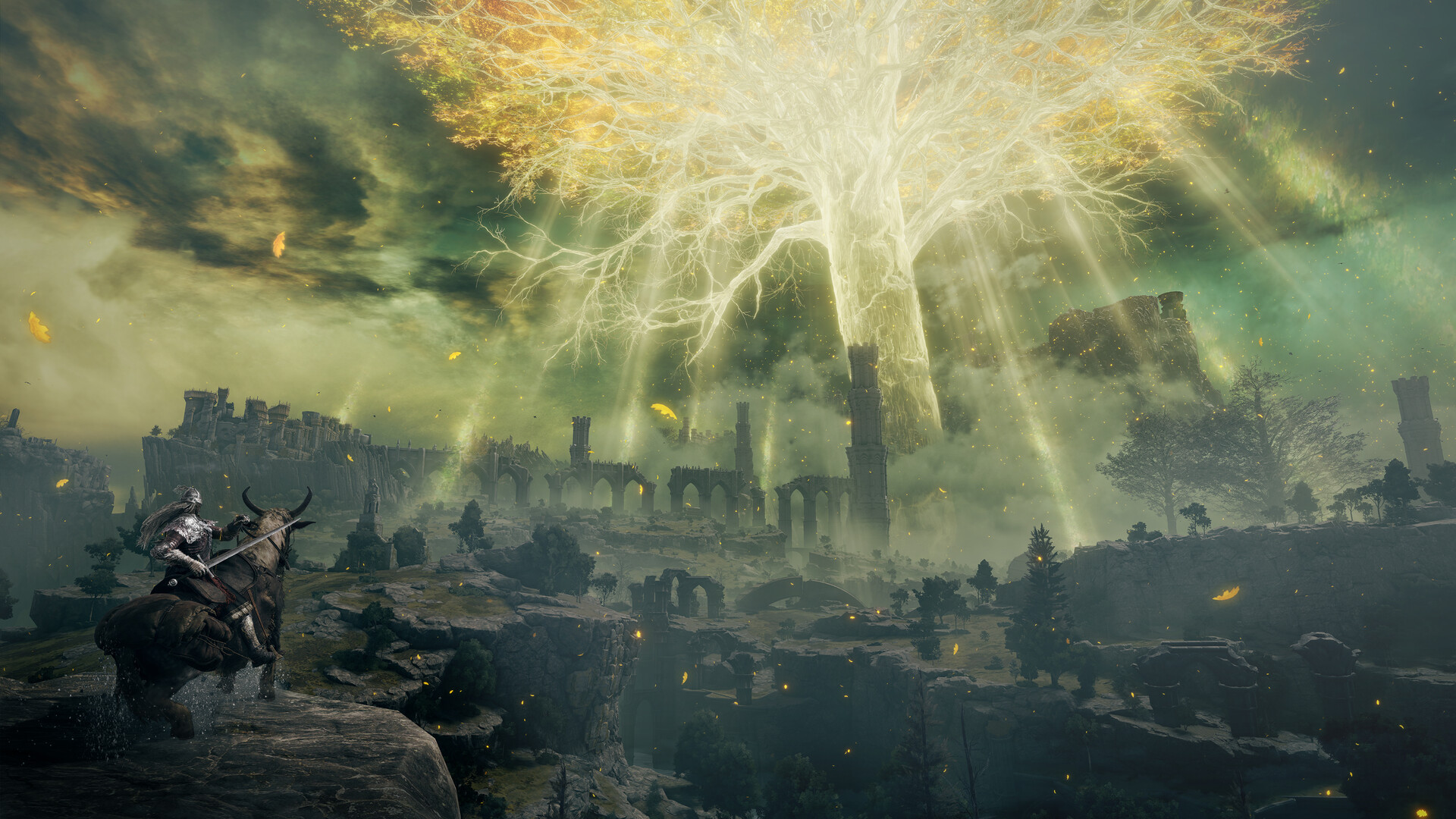
There is a moment early in Elden Ring where you crest a hill somewhere past the starting ruins, see the scale of the Lands Between spread out beneath you, and the game does absolutely nothing to help you. No waypoint pulses. No objective text slides across the screen. The map you just picked up has labels, sure, but also enormous blank spaces, and the Sites of Grace — those flickering golden checkpoints — point vaguely southward via a wisp that disappears if you follow it too literally. FromSoftware handed you a map, lit a candle, and left the room.
That sensation is the thing Elden Ring is most discussed for, and it mostly deserves the discussion. What gets talked about less is how the game's systems interact in ways that are sometimes brilliant, occasionally redundant, and in a handful of cases genuinely frustrating in ways that feel like design oversights rather than intentional challenge. The open world is not just Dark Souls with the walls knocked out. It is a different argument about how difficulty and discovery can coexist — one that FromSoftware mostly wins, but not cleanly.
The Open Field Does Something New for FromSoftware
FromSoftware's previous games — Dark Souls, Bloodborne, Sekiro — used corridor-and-bonfire architecture. Every path was deliberate. The openness of Elden Ring is a structural break, not just a visual one. The Limgrave starting region is genuinely one of the better-designed open-world introductions in recent memory, mostly because it rewards lateral thinking without requiring it. You can go straight, find a boss that destroys you, and retreat to do three other things that make you stronger. Or you can go straight anyway and scrape through. Both are valid. The game doesn't editorialize.
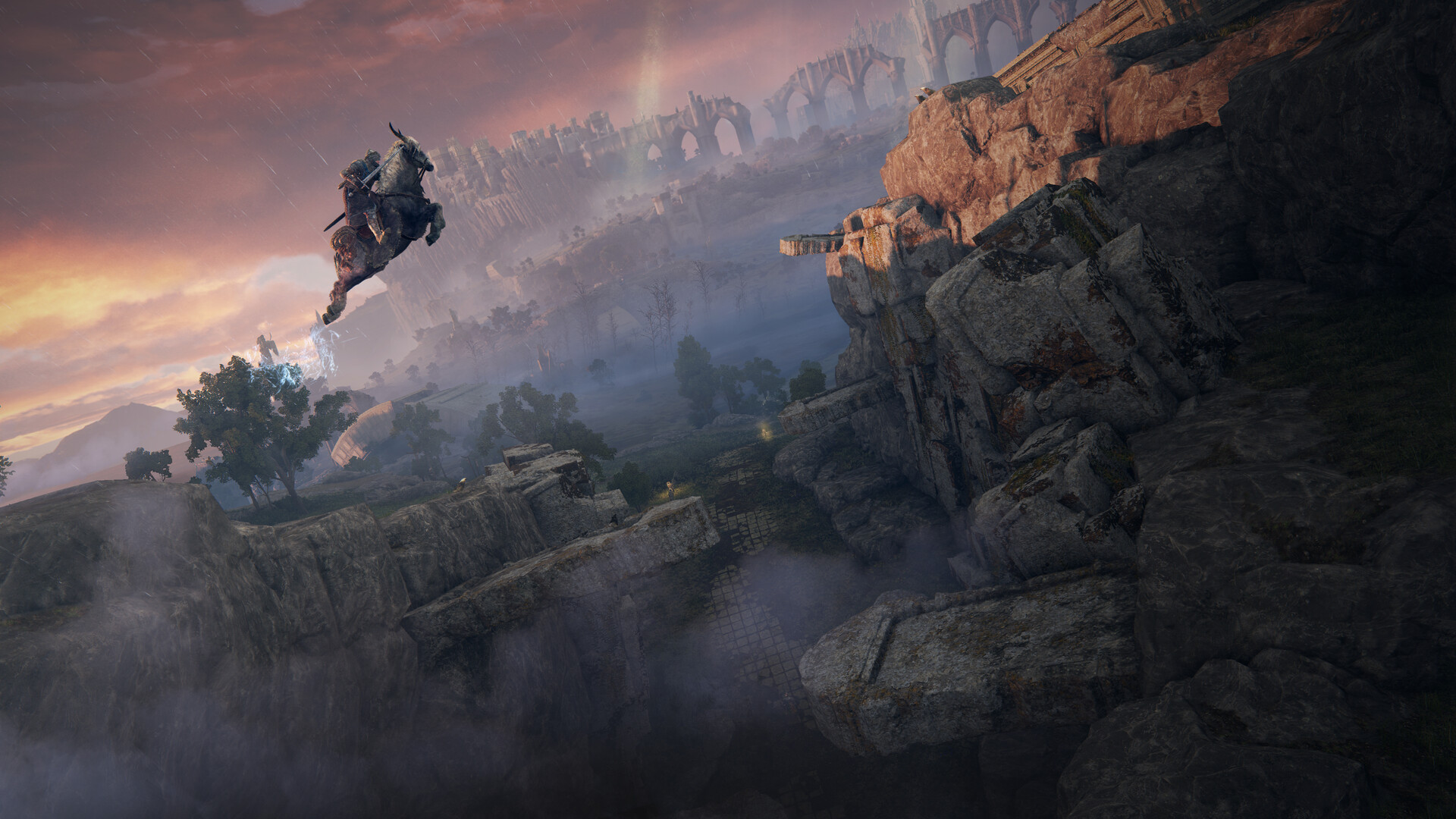 Scene from Elden Ring.
What makes this work mechanically is the Rune system and how it interacts with the freedom to level-grind without feeling like a grind. Enemy placements in the early zones are dense enough that a few laps of a given field will fund a meaningful stat increase. That feedback loop — explore, die, explore more carefully, get stronger — is familiar from FromSoftware's back catalog, but the open world gives it breathing room that the linear games couldn't. You're never stuck at a boss door with no alternative. There is always another cave, another crumbling tower, another merchant who might sell you something that changes your build's trajectory.
The Spirit Ashes system deserves mention here too. Being able to summon spectral allies during major encounters was a smart accessibility concession that didn't compromise the feel of the game for players who didn't want it. It also opened up solo players to a kind of asymmetric co-op experience with AI companions that have their own behavioral patterns. The Mimic Tear — which copies your own build — is a genuinely strange design choice that can trivialize some fights but also creates this uncanny mirror combat that feels thematically appropriate in a game preoccupied with cycles and repetition.
Where the Cracks Show
The late game is where Elden Ring's open-world ambitions start to strain against the FromSoftware tradition of escalating boss pressure. The back half of the game narrows considerably. Several of the major legacy dungeons are outstanding — Stormveil Castle and Raya Lucaria Academy are two of the best designed mid-size dungeons the studio has produced. But as the game progresses, the open fields between them feel less curated. Enemy repetition becomes noticeable. The sense of surprise that defined Limgrave doesn't fully carry forward.
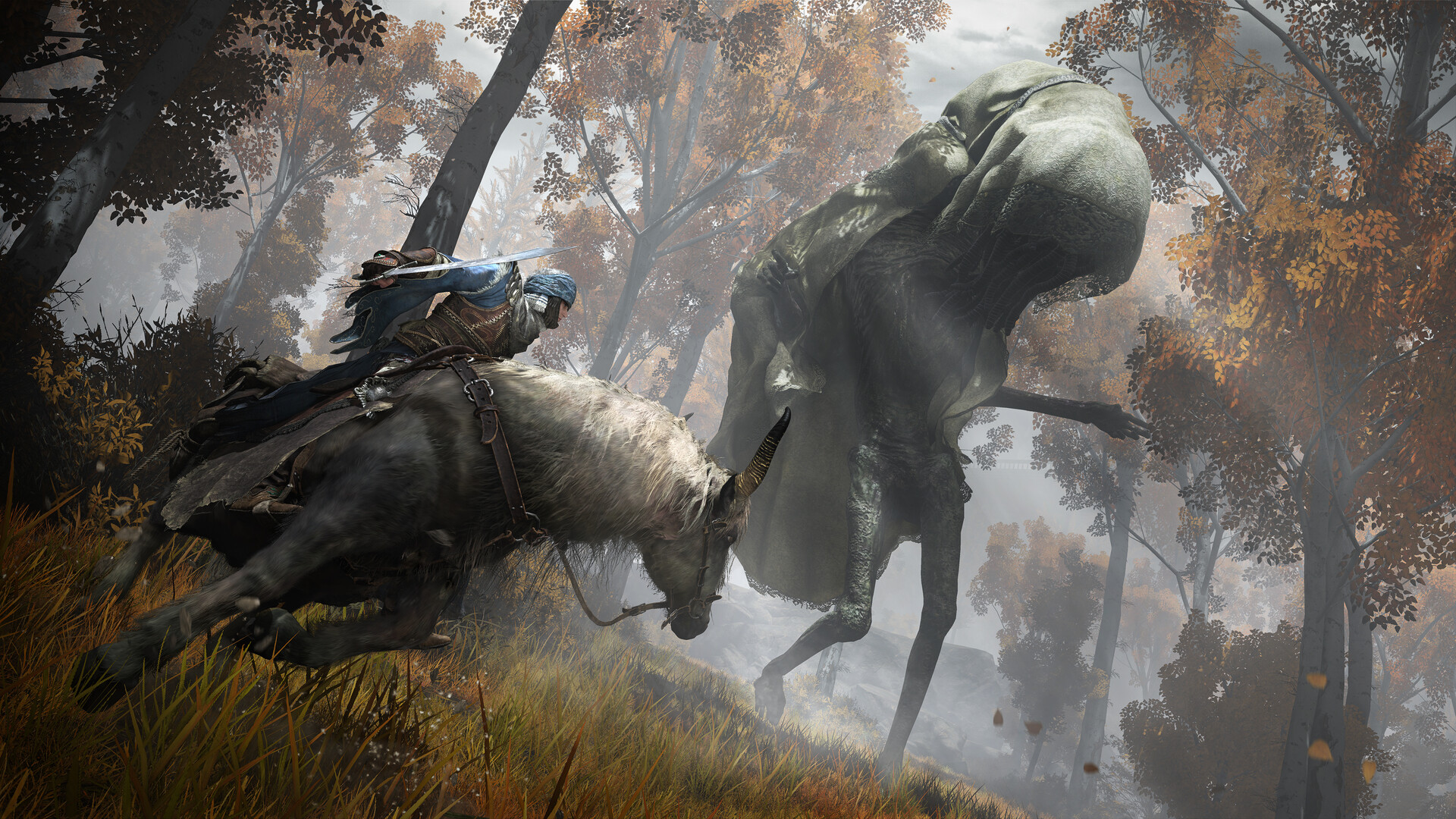 Scene from Elden Ring.
The boss design also fractures in quality more than FromSoftware's previous work. Some of the remembrance bosses — the major story-tied encounters — are extraordinary. Others feel like they were tuned for a different, faster build than whatever organic character you've assembled over eighty hours. The late-game tendency toward bosses with aggressive multi-hit combos and massive health pools stops feeling like a skill test and starts feeling like an endurance negotiation. That's a real criticism, not just a difficulty complaint. There's a difference between a fight that teaches you something and a fight that simply outlasts your patience.
The Lore Delivery Is the Best It Has Ever Been
FromSoftware has always told stories through item descriptions, environmental suggestion, and NPC fragments. Elden Ring does this better than any of their previous releases, partly because George R.R. Martin's involvement in the world-building gave the backstory a coherence that Dark Souls sometimes lacked. You don't need to read Martin's fingerprints in the game to feel the difference — the major factions have distinct political logic, the Demigods feel like a genuinely dysfunctional family rather than a collection of boss archetypes.
The character questlines are another area of improvement. Ranni's questline in particular is substantial enough to function as a secondary game-within-the-game, sending you across the entire map in sequence, rewarding attention without hand-holding. NPCs like Blaidd and Iji exist in relationship to each other and to the world's history in ways that pay off if you pursue them. Not all of the questlines are as developed — a few trail off inconclusively, which is either deliberately melancholy or a production limitation, and it's genuinely hard to know which.
Build Depth That Rewards Patience
The character-building system is the most complex FromSoftware has shipped. Eight stats, dozens of weapon types, a Sorcery and Incantation split that allows for wildly different magical builds, and an Ash of War system that lets you reassign weapon skills and damage affinities. A Strength build using a colossal sword plays nothing like an Intelligence build using projectile sorceries, and both play nothing like a Faith build stacking buff incantations before every fight. The variety is real, not cosmetic.
The trade-off is that first-playthrough build decisions can create downstream problems that feel unfair rather than instructive. Committing heavily to a stat early, then encountering a major boss with resistance to that damage type, is a problem the game doesn't communicate clearly. Veterans of the studio's prior work will know to carry multiple damage options; newcomers may not. This is the one area where I think an optional tutorial expansion would have genuinely improved the experience without softening anything that matters.
Performance and Technical Notes
At launch, Elden Ring had notable frame-rate issues on PC that were widely reported and took several patches to address. The console versions were more stable at release. As of the game's current state, the technical experience is significantly better than it was in the first weeks, though PC performance can still vary depending on hardware and settings. This is worth knowing if you're coming to the game late — the version most players are playing today is meaningfully more stable than what launched.
The art direction holds up regardless of platform. The lighting in the open fields, the architectural design of the legacy dungeons, the creature design — these don't require high frame rates to land. FromSoftware has a house visual style that Elden Ring pushes further than anything before it in terms of scale, and for the most part the scale doesn't dilute the detail.
Who This Game Is Actually For
Elden Ring is not a beginner-friendly game. The systems are deep and not fully explained. The world is designed to kill you while you learn its logic, and that philosophy is load-bearing — remove the punishment and you remove the satisfaction of progress. But it is more approachable than any FromSoftware title before it, and that's not just the Spirit Ashes talking. The open world gives struggling players genuine alternatives. You are rarely trapped in one place, and that changes the psychological texture of the difficulty.
Players who burned out on Dark Souls 3's funnel design might find the Lands Between genuinely fresh. Players who want clear quest tracking and map markers will remain unconvinced — and that's a legitimate preference, not a failure of imagination. Elden Ring is confident enough in its design language that it doesn't try to be everything. It just tries to be itself, loudly and at considerable length.
Elden Ring is the most fully realized thing FromSoftware has built, which also means it is the most fully realized version of their limitations. The late-game pacing wobbles. Some bosses are better than others by a margin wide enough to notice. The story rewards patience it doesn't always earn. And yet the opening seventy hours contain some of the best systems design in the genre's recent history — the kind that makes you think about how other games are built when you step away from it. That's not a small thing to pull off.
Editorial scoring
Reader Q&A
How long does it take to finish Elden Ring Handed Me a Map and Let Me Drown?
Main story runs around 24 hours depending on how thoroughly you explore. Completionists can spend 2-3× that.
Is Elden Ring Handed Me a Map and Let Me Drown good for newcomers to Open-World ARPG?
Yes — Elden Ring Handed Me a Map and Let Me Drown is a great entry point. The early hours teach the systems gradually and the difficulty curve is reasonable.
Which platform should I play Elden Ring Handed Me a Map and Let Me Drown on?
Console version is the most stable on launch. PC version benefits from the modding scene long-term.
Was Elden Ring Handed Me a Map and Let Me Drown worth the launch-day price?
Depends on backlog. The replay value justifies the price for genre fans; casual players should wait for a 40%+ discount.
Are there DLCs or expansions worth picking up?
Skip the cosmetic DLC. The story expansion is the only one we'd recommend at full price.
What did FromSoftware get right (and what could be better)?
The systems are confident and the combat is satisfying. The story handoffs and load times are the rough spots.
Reader comments