Dishonored 2 Lets You Be Cruel, Clever, or Both
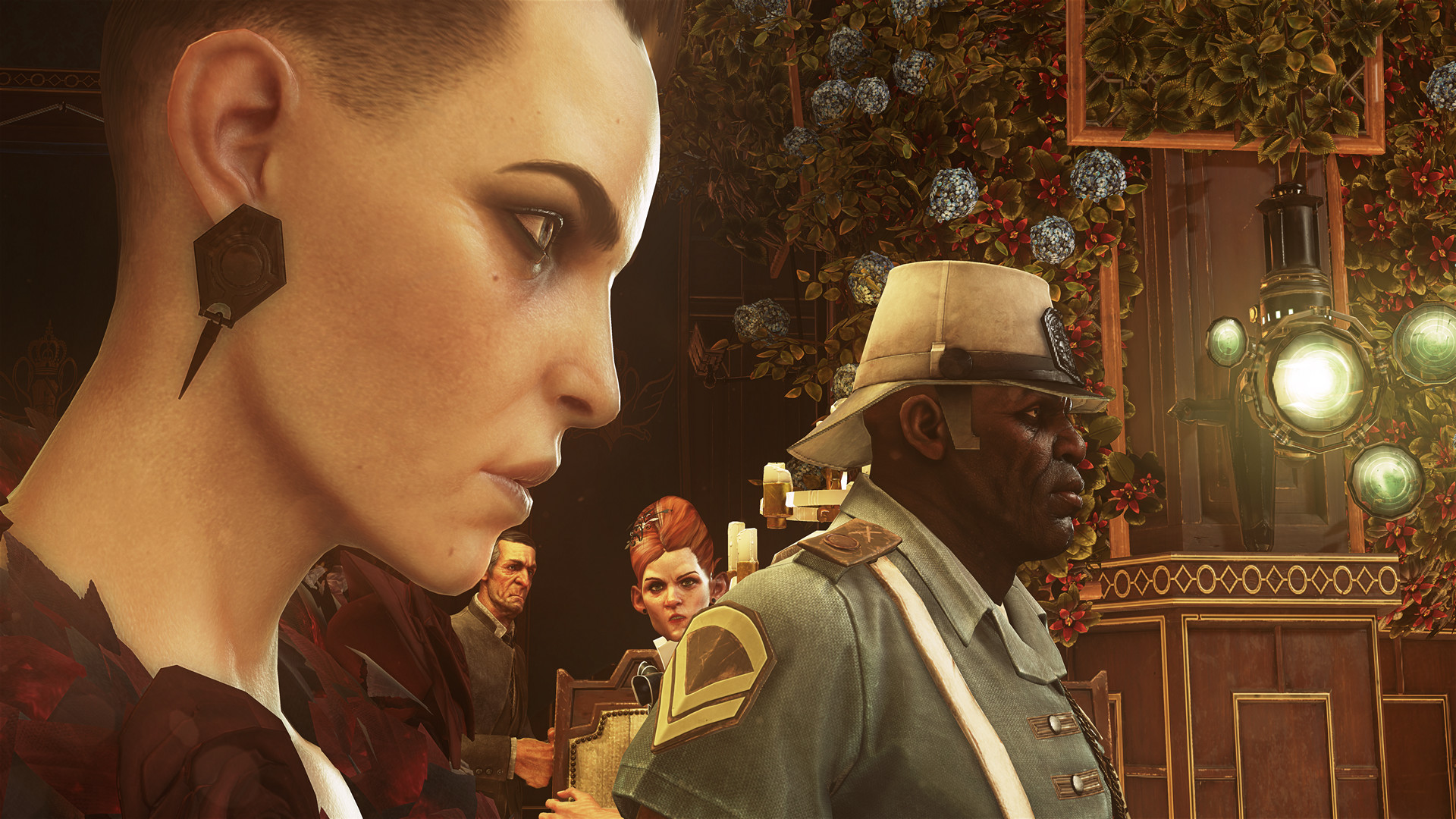
Dishonored 2 came out in 2016 and still gets brought up whenever the conversation turns to immersive sims done right. That reputation is mostly earned — but the game is also more specific and more demanding than its summary suggests. It's not enough to say it lets you play however you want. What's worth examining is how the systems underneath that freedom actually behave when you put them under pressure.
Arkane Studios built the sequel on a tighter foundation than the first game in almost every dimension. The level design is more architecturally ambitious, the powers are more mechanically distinct between the two playable characters, and the moral calculus — how much violence you tolerate before the world darkens around you — is more visible in its consequences. Whether all of that comes together consistently is a different question.
Two Characters, Two Very Different Toolkits
The choice to play as either Emily Kaldwin or Corvo Attano isn't cosmetic. Emily's abilities are built around manipulation and spatial trickery — Domino links enemies together so that whatever happens to one happens to all, and Doppelganger drops a decoy that guards and civilians will actually pursue. Corvo's kit is closer to the first game: Blink for short teleports, Possession for slipping into bodies, Windblast for shoving enemies off ledges. They solve the same problems through completely different logic.
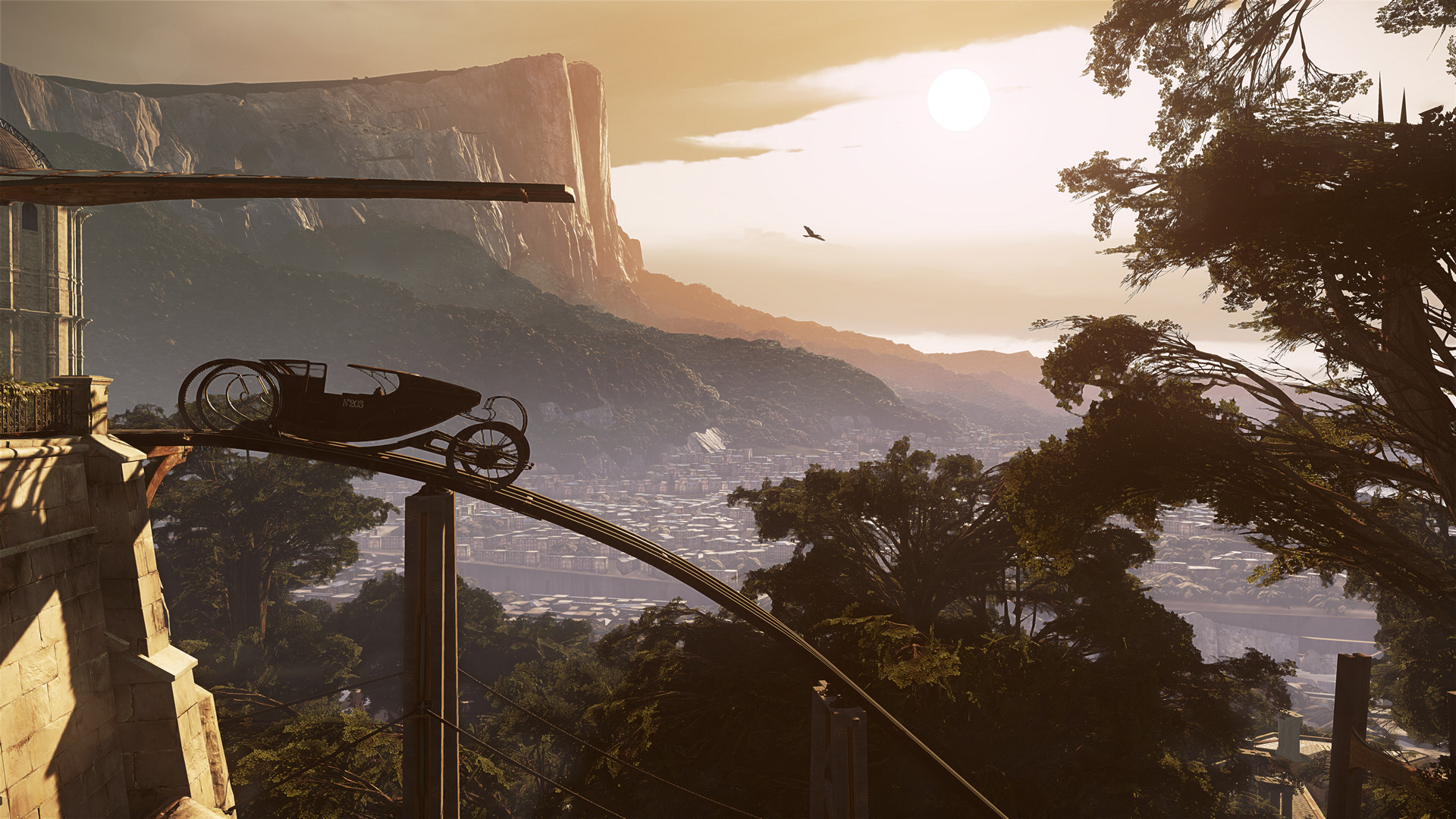 Scene from Dishonored 2.
Emily's Far Reach — her version of Blink — is the subtler choice. It doesn't teleport her cleanly; it pulls her forward in an arc, which changes how you think about rooftop traversal. It feels slightly riskier, slightly more kinetic. Corvo's Blink is more surgical. Both are fun, but if you're playing for the first time, Emily's kit rewards experimentation in a way that tends to produce more memorable moments.
There's a mild frustration buried here, though — upgrading abilities requires runes scattered across each mission, and on a first playthrough without detailed knowledge of the maps, some upgrades stay out of reach long enough that you'll form habits around the base versions. That's not necessarily bad design, but it means the power fantasy takes a while to fully assemble itself.
The Clockwork Mansion Changes What You Expect From a Level
The fourth mission — set inside Kirin Jindosh's mechanical manor, which reconfigures itself at the pull of a lever — is the point where Dishonored 2 stops being a good game and briefly becomes a remarkable one. Walls slide, floors retract, staircases fold in and out of existence. The architecture itself is the puzzle. The goal is to reach Jindosh, but how you get there depends on how quickly you understand that the house's transformation logic can be exploited rather than obeyed.
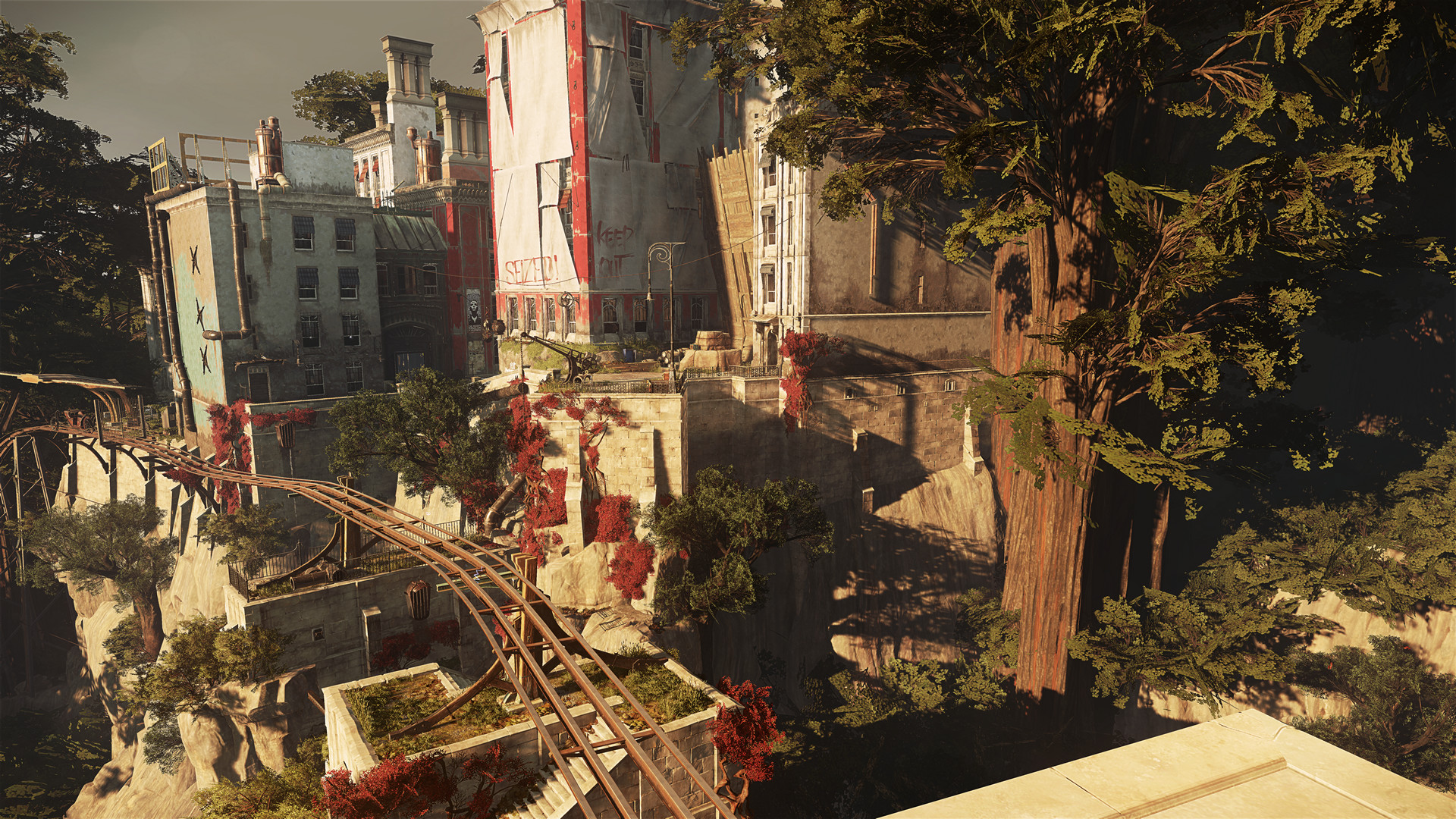 Scene from Dishonored 2.
A low-chaos approach might involve watching the reconfiguration sequence from outside the moving panels, finding the gaps the designers left open for exactly that purpose. A high-chaos run might involve disabling the mechanism early and fighting through the static layout. Both work. Neither feels like a cheat. That's the design achievement the level demonstrates — the player's approach feels authored rather than accidental.
Not every mission reaches that standard. A few of the middle chapters lean heavily on Karnaca's street-level layout — narrow alleys, rooftop paths, guard patrol routes — and they function well without doing anything especially surprising. The Clockwork Mansion sets an expectation that the rest of the game only occasionally meets.
Combat Is There If You Want It, But the Game Doesn't Pretend It's Neutral
The chaos system tracks how many people you kill. More deaths push the world toward a grimmer state — more plague rats, harder enemy encounters, a different ending. Arkane doesn't hide this, but it also doesn't moralize about it directly. The world just gets worse in ways that feel plausibly connected to the violence rather than punitive in a scripted sense.
Direct combat, when it does happen, has real weight. Sword timing involves a parry window that punishes button-mashing — you can't just spam attacks and expect guards to cooperate. Pistols and crossbows have limited ammunition that you'll notice if you're not exploring carefully. The non-lethal options — sleep darts, choke holds, the various powers that incapacitate without killing — require positioning and patience that combat often lets you skip. So the system is genuinely asking you to work harder for the cleaner outcome.
What it doesn't do especially well is sell the emotional texture of being violent. Some immersive sims — Prey (2017), also from Arkane — invest more clearly in the atmosphere of what it means to hurt people in that world. Dishonored 2's tone is operatic and stylized enough that combat reads more as mechanical consequence than moral weight. That's a reasonable creative choice, but it does mean the chaos system sometimes feels like a difficulty toggle in disguise.
Karnaca as a Setting Does More Work Than It Gets Credit For
The first Dishonored was set in Dunwall — a Victorian-adjacent, plague-ridden city built around whale oil and political decay. Karnaca, the southern city in the sequel, is architecturally warmer, more Mediterranean in its color palette, with bloodfly infestations replacing rats and windmill infrastructure replacing the oil refineries. The environmental shift matters more than a visual refresh. The political situation in Karnaca — a Duke who rules through surveillance and hired muscle rather than aristocratic pretense — produces a different kind of mission target.
The civilians you overhear, the written notes you find in drawers, the graffiti on walls — Arkane's environmental storytelling is quietly consistent across the whole game. You can piece together what Karnaca was before the Duke consolidated his grip, and how different people have adapted or resisted. None of this is delivered through cutscenes. It sits in the level geometry, waiting for the player who bothers to look.
What Ghost Runs Actually Test
Ghost — completing a mission without being detected — is where Dishonored 2 gets genuinely hard and genuinely interesting at the same time. The guard AI isn't perfect; there are patrol patterns that feel slightly mechanical and line-of-sight checks that occasionally behave in ways that defy the geometry. But within those limitations, planning a clean route through a mission requires the kind of spatial reasoning that most action games don't ask for at all.
A Ghost run forces you to read the environment differently. Windows become entry points. Balconies become staging areas. The time a guard spends looking away from a door is a resource you're managing. Emily's Domino is nearly useless in this mode — linking guards together means touching their detection systems — so the power selection shifts almost entirely toward movement and misdirection. That constraint sharpens the play.
There's a specific level — the one set around a manor split across two points in time, allowing you to toggle between past and present states of the same building — that remains one of the most inventive single missions in the genre. A Ghost run through it requires understanding both timelines simultaneously. It's demanding in a way that feels fair rather than punishing, which is a balance Arkane doesn't always get right but absolutely gets right here.
Dishonored 2 is not a game that holds your hand, and it's not a game where every mission lands with equal force. But the ceiling on what it lets you do — when you understand the systems, when you've found the runes, when you've started reading the levels as problems rather than corridors — is genuinely high. The cruelty is optional. The cleverness is built in.
Editorial scoring
Reader Q&A
How long does it take to finish Dishonored 2 Lets You Be Cruel, Clever, or Both?
Main story runs around 24 hours depending on how thoroughly you explore. Completionists can spend 2-3× that.
Is Dishonored 2 Lets You Be Cruel, Clever, or Both good for newcomers to Immersive Sim?
It depends. The systems are deep but the tutorial does a fair job. Veterans of Immersive Sim will feel at home faster.
Which platform should I play Dishonored 2 Lets You Be Cruel, Clever, or Both on?
Console version is the most stable on launch. PC version benefits from the modding scene long-term.
Was Dishonored 2 Lets You Be Cruel, Clever, or Both worth the launch-day price?
If you're a fan of Arkane Studios, yes. If you're new to the studio, a sale price is more comfortable.
Are there DLCs or expansions worth picking up?
Skip the cosmetic DLC. The story expansion is the only one we'd recommend at full price.
What did Arkane Studios get right (and what could be better)?
Arkane Studios nailed the moment-to-moment loop and the world-building. Pacing in the mid-game and inventory UX have room for improvement.
Reader comments