Street Fighter 6 Will Punish You Until You Stop Guessing

Street Fighter 6 does not ease you in. The training room is there, the tutorials are thorough, and the World Tour mode gives you a sandbox where failure costs nothing — but the moment you enter a real match, against a real opponent, the game starts charging tuition. You will lose. You will lose in ways that feel unfair until they stop feeling unfair. That transition, from 'this is broken' to 'I walked into that', is what the game is actually teaching.
This guide is aimed at players who have passed the absolute beginner stage — you know what a Drive Gauge is, you have landed a few specials in training — but who keep hitting a ceiling in ranked or casual play. Most of that ceiling is self-inflicted. The corrections are concrete and learnable. What follows is not a tier list or a frame-data breakdown; it is a structural map of the mistakes that keep most players stuck below intermediate level.
Stop Jumping So Much
Jumping is the most common error at low-to-mid level Street Fighter 6. It feels aggressive and it sometimes works, which makes it hard to give up. The problem is that any competent player has an anti-air prepared — whether that is Ryu's crouching heavy punch, Cammy's upward-angled cannon spike, or Ken's Shoryuken. A jump that gets anti-aired is not just a punish; it is a full knockdown, often with follow-up pressure, and it shifts momentum sharply.
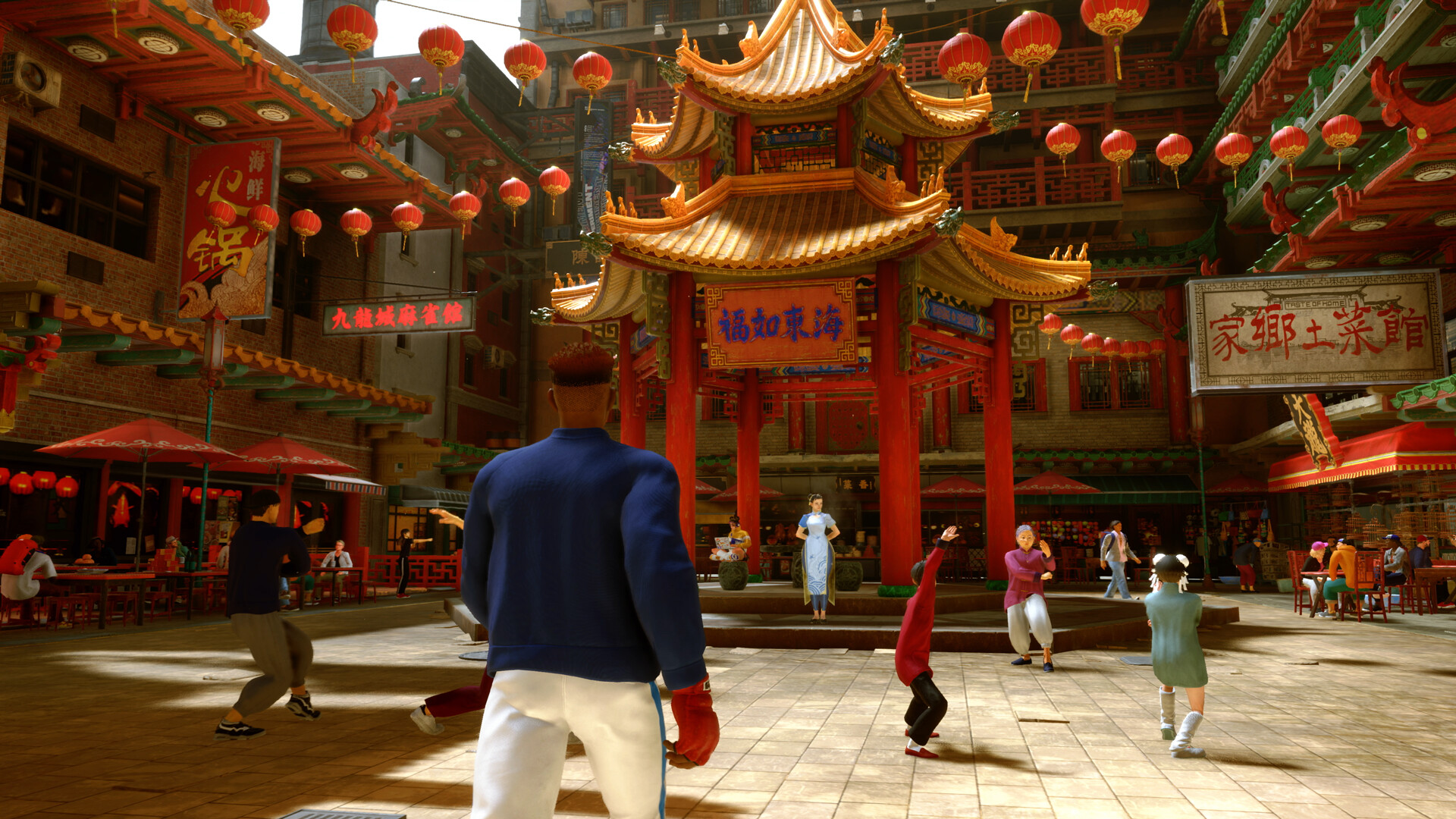 Scene from Street Fighter 6.
The instinct to jump comes from wanting to close distance or avoid a fireball. Both of those goals have better solutions. To close distance, use the Drive Rush mechanic — a dash cancellable from a Drive Impact or a cancelled normal — which covers ground while keeping you grounded. To counter projectiles, work on reaction blocking rather than jumping over them. Blocking a Guile Sonic Boom and walking forward is slower than jumping it, but it does not hand your opponent a free punish. Jumping should be reserved for reads, not habits.
Drive Gauge Is Not a Resource to Hoard
The Drive System is the engine of Street Fighter 6's offense and defense, and most new players misuse it in the same direction: they save it. They finish rounds with four or five Drive bars untouched, which means they spent the entire match playing a deliberately constrained version of the game. The gauge refills between rounds. There is no long-term bank here.
Drive Rush extends combos and creates pressure from almost nothing — a cancelled light normal into Drive Rush can close the gap and convert into a full punish. Drive Parry absorbs hits and charges the gauge when you hold it, making it genuinely useful even outside of perfect Parry windows. Drive Impact, the armored forward attack, beats most options on a read and wall-splats opponents near corners. The counterpoint is Burnout: if your gauge empties, you get hit harder, you cannot use EX moves, and your Drive Parry stops functioning. Spending Drive intelligently — rather than either hoarding or burning it recklessly — is closer to resource management in an RTS than anything else in the genre.
A practical exercise: spend one session consciously throwing out Drive Rushes in neutral even when you are not sure they will connect. The goal is to build intuition for the distances and timings, not to win those specific interactions. Losing rounds to figure out spacing is how the muscle memory gets built.
Blocking Is Not Passive — It Is Intelligence Gathering
Holding back or down-back does not feel productive. Watching your character absorb hits while you wait for an opening can feel like losing even when it is correct. Resist that feeling. When an opponent is running their offense on you, the most useful thing you can do is block carefully and pay attention to the pattern. Every player repeating a sequence is handing you information.
Most mid-level players have two or three string patterns they default to. Identify the last hit of those strings — the move they use to end pressure — and ask whether it is safe or punishable on block. If it is a punishable move and they keep throwing it, the answer is a fast counter-attack the moment they finish. If it is safe, look for throw tech opportunities or reversal windows. Blocking longer than feels comfortable is how you learn those patterns. Mashing buttons the moment pressure starts is how you get counter-hit into a combo.
Corner Positioning Is Not an Accident
The corner in Street Fighter 6 is not just a geographic disadvantage; it removes your primary defensive option of walking back. Cornered, your only escapes are jumping (which invites anti-airs), Drive Reversals, or invincible reversals — all of which cost resources or carry risk. Characters like Zangief and Manon become dramatically more threatening when they have cornered an opponent, because their grab-heavy game cannot be escaped by simply walking out of range.
Managing screen position is an active responsibility, not something that just happens. When you get knocked down near the corner, the wakeup decision is consequential. A Drive Reversal burns gauge but creates space. Staying and blocking hopes the opponent does not have a meaty setup ready — and at intermediate level, they often do. Getting comfortable spending resources to escape the corner, rather than hoping your opponent makes a mistake, is a significant mental shift. Corner carry is baked into many characters' combo routes deliberately; recognizing when your opponent is building toward that and adjusting your movement earlier is the cleaner solution.
One Character, Long Enough to Feel Uncomfortable
Character switching is the most comfortable form of avoidance in fighting games. If you are losing with Luke, maybe Kimberly will suit you better. If Kimberly's links feel tight, maybe you should try Marisa's simpler gameplan. This kind of rotation keeps you permanently in the early-familiarity phase, where everything feels fresh but nothing is actually learned.
Pick a character whose gameplan you can describe in one sentence and commit for a meaningful stretch — enough matches to reach an uncomfortable plateau and push through it. Ryu is not flashy but every concept in the game runs through his kit: a fireball for zoning, a reversal for punishing jumps, a command grab for conditioning, a target combo for confirms. He is not the best character but he teaches you how to play the game rather than teaching you how to play around a specific tool. Luke's straightforward punch pressure serves the same function on the offensive side. The character matters less than the duration of the commitment.
What the Combo Trial Room Is Actually For
Most players treat combo trials as the place you go to learn combos. That is not wrong, but it undersells the function. The trials exist to teach hit-confirm timing — the skill of recognizing, mid-sequence, that the first hit connected and that committing to the rest of the string is correct. That recognition happens in a fraction of a second and it requires repetition, not theory.
Work through the first half of a given character's trial list rather than aiming for the hardest entries. The later trials typically require more precise links or juggle states that come up rarely in real matches. What matters more is getting comfortable with a two or three-hit confirm — a light into a medium into a special — that you can execute when your brain is also processing your opponent's movement, their Drive Gauge, their position, and your own health bar. Training room execution and match execution are different skills. The trial room builds the foundation; everything else has to be practiced under pressure, which means accepting short-term losses as part of the process.
Street Fighter 6 is generous with its tools compared to previous entries — Modern controls exist, the tutorial is genuinely instructive, and the World Tour mode removes some of the intimidation of learning in isolation. But the game does not reward players who keep doing what is comfortable. The ranked mode will tell you exactly where your habits are exploitable; the question is whether you treat that information as a verdict or a set of instructions. Most players who break through intermediate level did not get faster or smarter — they just stopped flinching at the feedback.
Reader Q&A
Is this guide spoiler-free?
We avoid story spoilers. Mechanics and systems are explained directly, but plot beats are not covered.
How current is this guide?
Updated for the most recent patch as of June 2026. Major balance changes are noted inline.
Do I need DLC for these strategies to work?
No. Everything covered here applies to the base game. Where DLC content is referenced, we mark it clearly.
Will following this guide work on hardest difficulty?
Mostly — yes. A few strategies become tight on hardest difficulty; we flag those where relevant.
Reader comments