Sons of the Forest Won't Explain the Forest
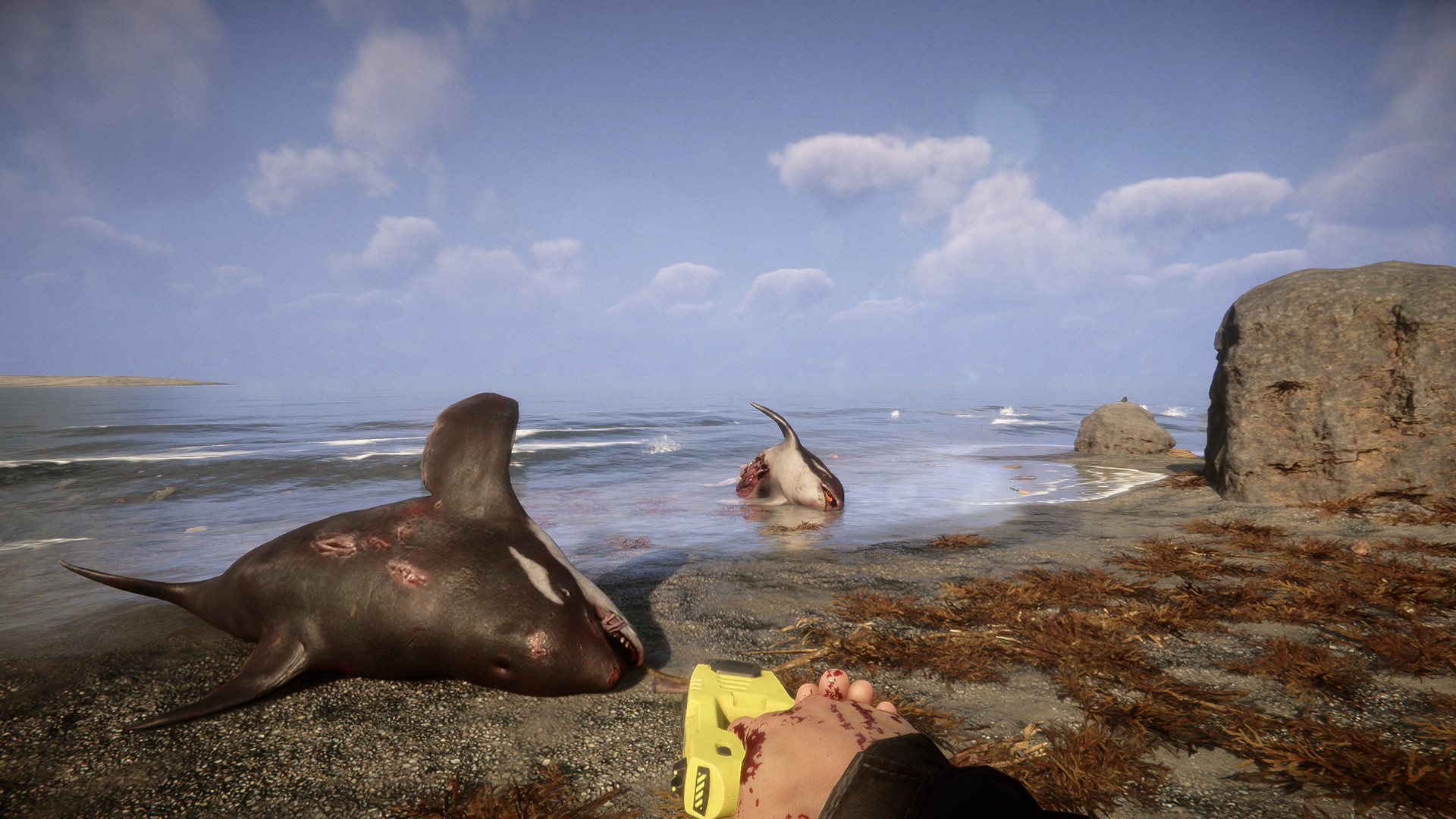
Sons of the Forest drops you from a helicopter into a dense, hostile island and then waits. No quest marker. No tutorial pop-up explaining what the red plants do or why the mutants have stopped moving in that clearing. Endnight Games built the follow-up to The Forest around a single design principle: the environment teaches through consequence, not instruction. That works brilliantly once you accept it, and it works terribly if you spend your first three hours punching trees in the wrong order wondering why you keep dying before dark.
This guide exists because there is real depth here worth reaching. The survival loop, the building system, Kelvin's command set, the way the cannibal factions escalate in behavior over in-game days — none of it gets explained with sufficient clarity by the game itself. What follows is practical. Mechanics, priorities, tradeoffs. No padding.
The First Day Is a Resource Audit, Not an Adventure
When you land, ignore the helicopter wreckage narrative pull. Your immediate resource ceiling is what matters. Craft the basic stone axe first — small rock plus stick plus rope — because it lets you harvest logs, which unlocks almost everything else in the building tree. The crafting system does not use a menu in the traditional sense; you place items on the ground in front of you and the game recognizes valid combinations. That tactile system is one of the more interesting things about Sons of the Forest, and it also means new players accidentally skip it entirely because nothing points to it.
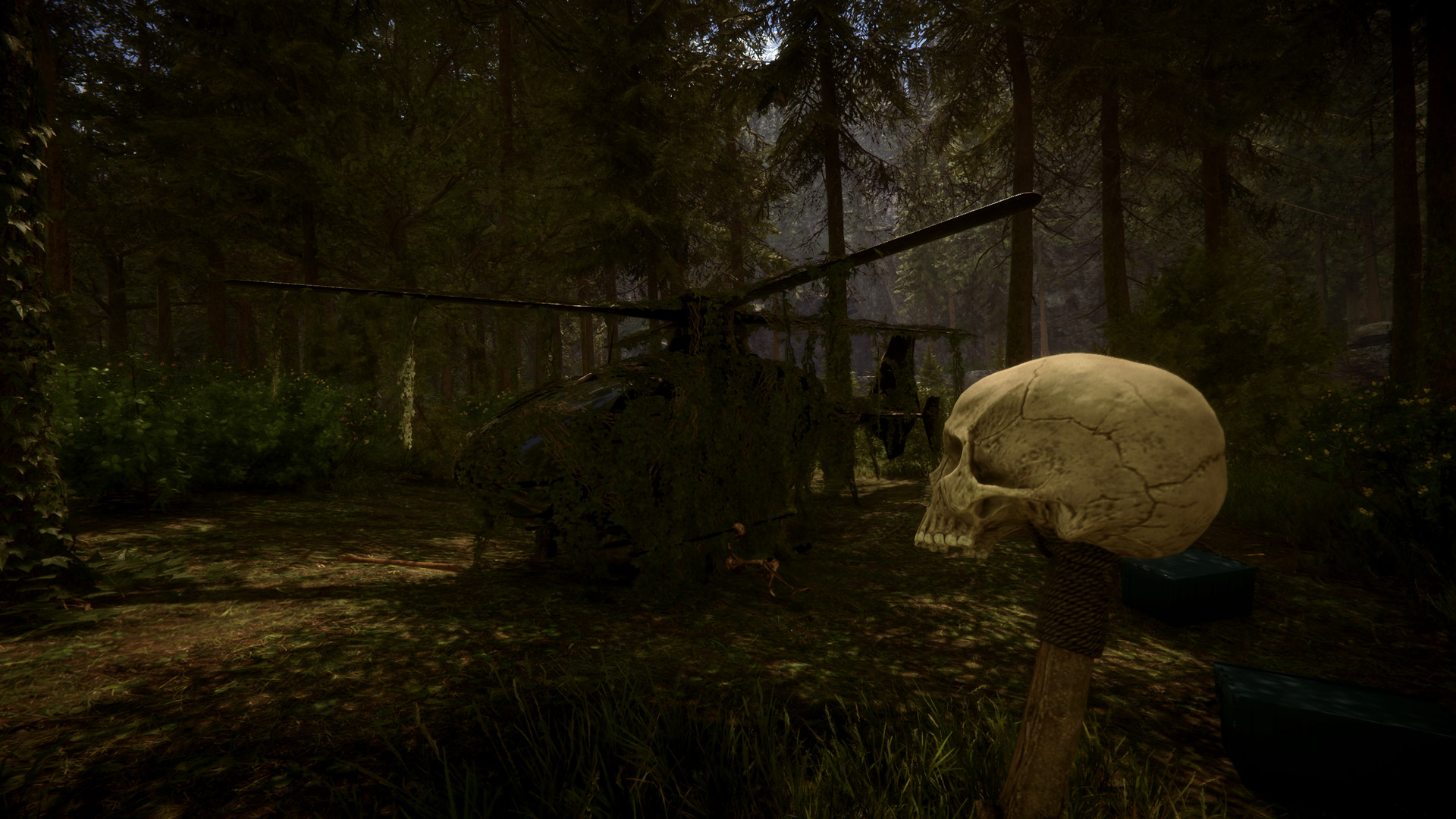 Atmospheric detail in Sons of the Forest.
Get a shelter built before you explore laterally. A basic lean-to costs a handful of sticks and logs and costs you almost no time. It lets you save, which matters more than it sounds given how the island's threat level ramps through the night cycle. Push past that shelter and head toward the coast or the snow biome on day one and you are likely meeting enemies you cannot handle yet, carrying no stored food, with no spawn point closer than your crash site.
Kelvin Is a Tool, Not a Companion Mechanic
Kelvin, the NPC who survives the crash with you, confuses a lot of newcomers because the game frames him like a companion character from something like The Last of Us. He is not. He is closer to a background process you can queue tasks on. Hand him a notepad via the interaction prompt, give him an order — gather fish, collect logs, build a fire — and then forget about him while you do something else. He is slow, he sometimes gets stuck on terrain, and he cannot fight. But over the course of an in-game day, a Kelvin tasked with log collection meaningfully extends how much you can build without grinding the axe yourself.
Virginia, the three-armed mutant woman who may start visiting your camp, operates differently. She builds trust through non-aggression over time and eventually accepts weapons and clothing, at which point she will patrol and engage enemies. Do not chase her early. Do not aim a weapon at her. The relationship is built entirely through patient proximity and she will simply stop appearing if you spook her repeatedly. Think of it less as a friendship system and more as a wildlife domestication mechanic with high variance.
Food and Water Have Different Urgency Curves
Thirst kills faster than hunger in Sons of the Forest, and the game is not especially loud about that. Build a water collector early — it requires a turtle shell, which means visiting the beach at low-threat hours and waiting for a turtle, or finding one of the pre-made ones in cave systems. Rain also fills the collector, which can cover you for two or three in-game days depending on weather. If you are nowhere near either option, boiling river water over a fire works and costs very little.
For food, the opening hours favor fishing over hunting. Fish traps placed in shallow water near the coast yield consistent returns without requiring ammo or a fight. Hunting deer with the spear is possible but unreliable and expensive in stamina. The island has berry bushes scattered across mid-elevation terrain that respawn on a cycle; learning two or three of those locations near your base turns food from a crisis-management problem into a routine. That shift in how food feels — from emergency to maintenance — is when Sons of the Forest starts opening up rather than grinding you down.
The Building System Rewards Patience More Than Creativity
Sons of the Forest uses a freeform log-stacking construction system rather than a grid-snapping one. The difference matters. You can build structures of real architectural complexity, but you can also build structurally incoherent buildings that collapse or let enemies walk through gaps you did not notice. Spend the first few bases building small and solid rather than ambitious and porous. A single-room log cabin with a door, a rack for storage, and a fire pit does more for survival than a three-story structure with gaps in the wall geometry.
The Book of Blueprints — the in-game build guide you access by equipping the booklet from your inventory — shows you pre-designed structures that can be placed as guided builds. These are underused by players who feel them to be too prescriptive, but they are genuinely worth using for defensive structures like spiked walls and traps. Building a perimeter is less about aesthetics and more about funneling enemy pathing. Cannibals approach from consistent directions once you have established a base; angle your defensive structures based on the terrain, not the square boundary of your camp.
Combat Needs a Different Mental Model Than Most Survival Games
The combat in Sons of the Forest is messier and more physics-driven than contemporaries like Green Hell or even the original The Forest. Enemies ragdoll in ways that look chaotic but encode real information — a cannibal knocked backward is momentarily vulnerable, and the follow-up heavy attack while they are grounded is the most efficient damage you will deal in melee. The problem is that new players try to fight groups using the same approach they would use against a single enemy, which gets them surrounded immediately.
Retreat is a legitimate combat strategy and the game's terrain supports it well. Dense trees break line-of-sight. The log sled and other placed objects create improvised obstacles. Ammo is scarce enough in the early game that reserving the shotgun for enclosed spaces — particularly caves, which have no retreating room — is a sensible discipline rather than a concession. Get comfortable with the idea that not every encounter needs to end with the enemy dead. Many of them are better ended with you thirty meters away in the dark.
Caves Are Progression Gates, Not Optional Content
The island's cave network holds most of the tools that meaningfully change your capabilities: the rebreather for underwater sections, the rope gun for traversal, the shovel that opens bunker entrances. These are not random loot — they are placed in specific cave systems, and progressing the game's loose narrative requires most of them. The caves are also where the enemy density spikes hardest and where the stamina-management system becomes genuinely punishing. Going in under-resourced is a common error; going in without a torch or headlamp is a worse one.
Mark cave entrances on your GPS tracker as you find them rather than relying on memory. The island is large enough that backtracking to an unmarked entrance you found at dusk three sessions ago is a real time cost. The GPS system is rudimentary compared to something like The Long Dark's mapping, but it handles custom markers well and that function alone prevents a significant amount of frustration.
Sons of the Forest is a game that gets better the more structure you bring to it yourself. The hostility of the island is real, but so is the satisfaction of a base that has stopped feeling fragile, a Virginia who patrols with a shotgun, and a cave entrance you have cleared twice and no longer fear. The game will not explain that arc to you. You build it.
Reader Q&A
Is this guide spoiler-free?
We avoid story spoilers. Mechanics and systems are explained directly, but plot beats are not covered.
How current is this guide?
Updated for the most recent patch as of June 2026. Major balance changes are noted inline.
Do I need DLC for these strategies to work?
No. Everything covered here applies to the base game. Where DLC content is referenced, we mark it clearly.
Will following this guide work on hardest difficulty?
Mostly — yes. A few strategies become tight on hardest difficulty; we flag those where relevant.
Reader comments